
Featured Article Feb 17, 2026

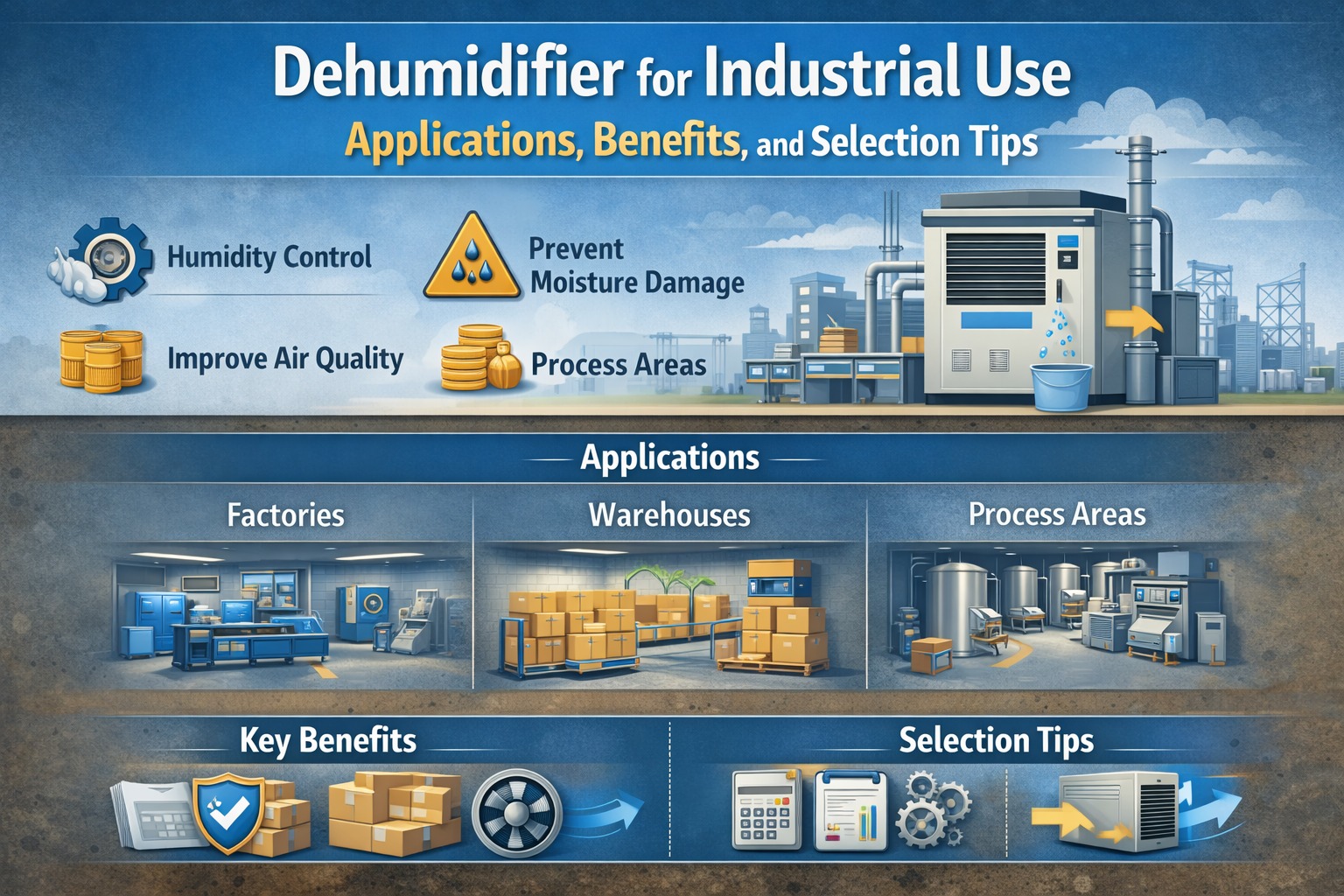
Dehumidifier for Industrial Use: Applications, Benefits, and Selection Tips

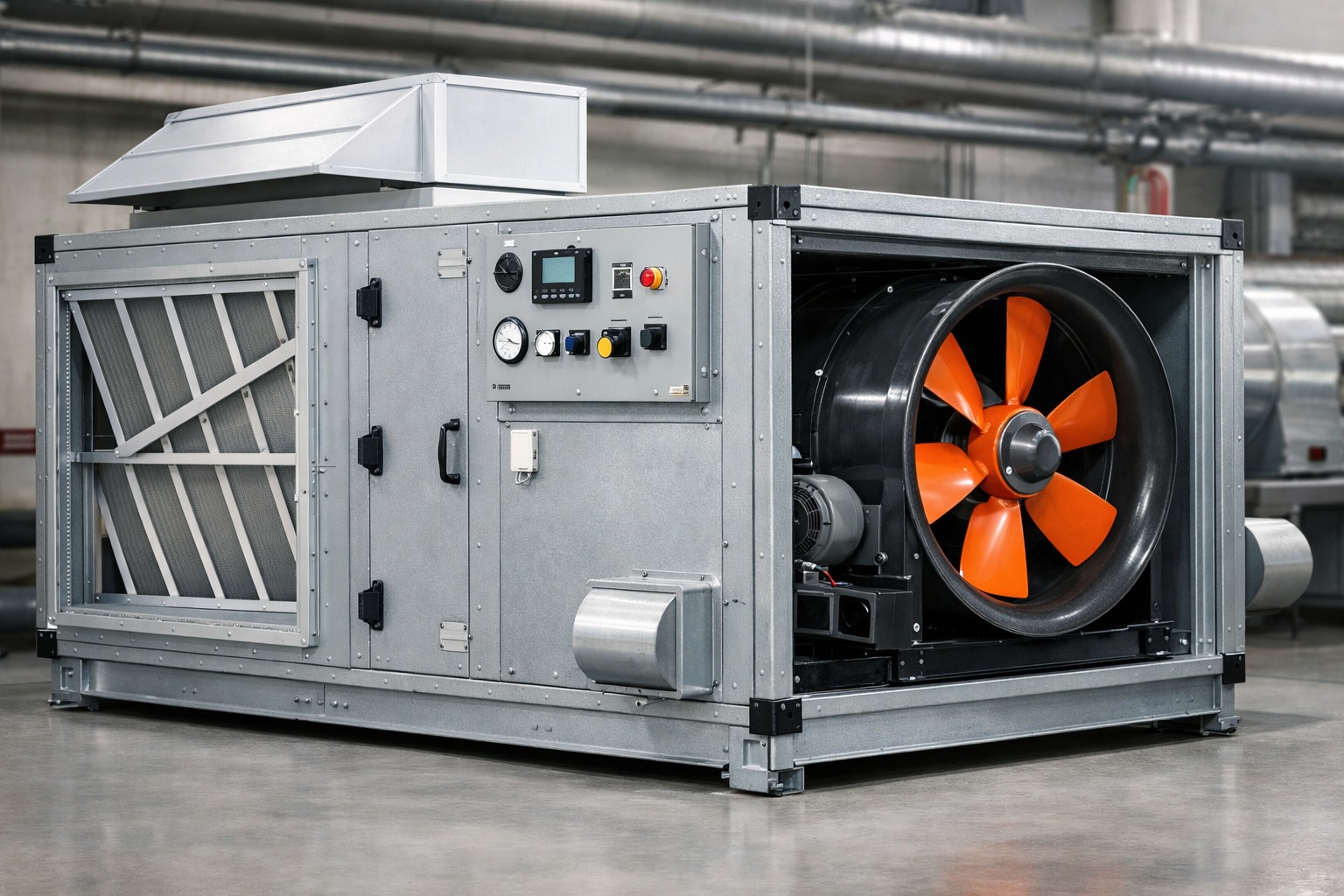
Humidity is one of the most underestimated challenges in industrial environments. While temperature often gets attention, uncontrolled moisture in the air can silently damage products, machinery, infrastructure, and even employee health.This is where a dehumidifier for industrial use becomes essential. Unlike small residential units, industrial dehumidifiers are designed to control moisture levels in large spaces such as factories, warehouses, pharmaceutical plants, food processing units, and data centers.In this blog, we will explore how industrial dehumidifiers work, why they matter, their applications, benefits, comparisons, selection tips, and frequently asked questions — all in a clear and practical format.Why Humidity Control Is Critical in IndustriesExcess humidity can cause:Corrosion of machineryRust formation on metal surfacesMold growthProduct spoilageElectrical failuresStructural damageReduced worker comfortFor industries dealing with sensitive materials like pharmaceuticals, electronics, paper, textiles, and food products, even slight humidity imbalance can lead to significant losses.A properly designed dehumidifier for industrial use maintains optimal moisture levels, protecting assets and ensuring consistent operational performance.What Is a Dehumidifier for Industrial Use?A dehumidifier for industrial use is a heavy-duty machine designed to remove excess moisture from large commercial or industrial spaces. It works by extracting water vapor from the air and maintaining a controlled humidity level.Unlike domestic models, industrial systems are:High capacityContinuous operation capableDesigned for harsh environmentsIntegrated with HVAC systemsEnergy-efficient for large-scale useHow Industrial Dehumidifiers Work (Step-by-Step)Understanding the process helps in better selection.Step 1: Air IntakeHumid air is drawn into the dehumidifier unit through a powerful fan.Step 2: Moisture RemovalDepending on the type, the unit removes moisture using either:Refrigeration processDesiccant rotor technologyStep 3: Condensation or AbsorptionWater vapor is converted into liquid form or absorbed by desiccant material.Step 4: Water DrainageCollected water is drained continuously.Step 5: Dry Air ReleaseDry, conditioned air is circulated back into the industrial space.This cycle runs continuously to maintain stable humidity levels.Types of Industrial DehumidifiersChoosing the right type is crucial.1. Refrigerant DehumidifiersBest suited for warm environments. They cool the air to condense moisture.Ideal for:WarehousesProduction floorsCommercial buildings2. Desiccant DehumidifiersUse moisture-absorbing materials to remove humidity.Ideal for:Cold storagePharmaceutical manufacturingElectronics productionLow-humidity applicationsEach type serves different industrial needs.Applications of Dehumidifier for Industrial UseIndustrial humidity control is required across various sectors:Manufacturing PlantsPrevents rust and protects machinery.Pharmaceutical IndustryMaintains strict environmental standards.Food Processing UnitsPrevents bacterial growth and product spoilage.Textile IndustryMaintains fabric quality and reduces defects.Warehouses & StoragePrevents moisture damage to stored goods.Data CentersProtects servers and electronic components.Cold Storage FacilitiesPrevents condensation and ice formation.Humidity control directly impacts product quality and compliance.Benefits of Using an Industrial Dehumidifier1. Equipment ProtectionReduces corrosion and extends machine life.2. Improved Product QualityPrevents moisture-related defects.3. Reduced Maintenance CostsLower risk of mold and rust reduces repair expenses.4. Energy EfficiencyDry air feels cooler and reduces HVAC load.5. Workplace SafetyPrevents slippery floors and mold exposure.6. Compliance with RegulationsIndustries like pharma require strict humidity control.A reliable dehumidifier for industrial use ensures operational stability and asset protection.Dehumidifier vs Air Conditioner – What’s the Difference?Many industries assume AC systems are enough. However:FeatureDehumidifierAir ConditionerPrimary FunctionMoisture removalTemperature coolingHumidity ControlPreciseLimitedIndustrial CapacityHighModerateContinuous OperationYesYesSuitable for Moisture-Sensitive ProcessesYesNot alwaysConclusion: AC systems reduce temperature, but they are not designed for precise humidity control. Industrial dehumidifiers are specialized for moisture management.Signs Your Industry Needs a DehumidifierVisible condensation on wallsRusting equipmentMold odorWet packaging materialsElectronic malfunctionsHigh humidity readings (above 60%)If these issues exist, installing a dehumidifier for industrial use can solve them efficiently.Step-by-Step Guide to Selecting the Right DehumidifierChoosing the right system requires careful planning.Step 1: Measure the AreaCalculate the cubic volume of the space.Step 2: Identify Humidity LevelsDetermine current RH (Relative Humidity) and target RH.Step 3: Understand ApplicationIs it cold storage, warehouse, or production unit?Step 4: Choose TypeRefrigerant for warm areas, desiccant for low-humidity needs.Step 5: Evaluate Drainage SystemContinuous drainage is essential for industrial settings.Step 6: Check Energy EfficiencyLook for energy-saving motors and automation controls.Step 7: Choose Experienced ManufacturerEngineering support ensures correct sizing and performance.Proper selection avoids underperformance or excess energy usage.Pros and Cons of Industrial DehumidifiersProsProtects assetsPrevents moisture damageImproves product shelf lifeSupports complianceEnhances operational efficiencyConsInitial installation costRequires regular maintenancePower consumption if oversizedChoosing the correct capacity minimizes these drawbacks.Maintenance Tips for Long-Term EfficiencyTo ensure consistent performance:Clean filters regularlyInspect coils and rotorsCheck drainage linesMonitor humidity sensorsSchedule annual servicingRoutine maintenance ensures durability and optimal performance.Energy Efficiency and SustainabilityModern industrial dehumidifiers are designed with:Smart humidity sensorsVariable speed drivesAutomated controlsEnergy-efficient compressorsThese features reduce electricity consumption while maintaining consistent performance.Investing in the right dehumidifier improves sustainability and reduces long-term operational costs.Common Mistakes to AvoidBuying undersized unitsIgnoring humidity calculationsNot planning for continuous drainageChoosing based only on priceSkipping professional consultationIndustrial humidity control requires technical expertise.FAQs – Dehumidifier for Industrial Use1. What is the ideal humidity level for industries?Typically between 40%–60%, depending on the industry.2. Can a dehumidifier run 24/7?Yes, industrial units are designed for continuous operation.3. Is dehumidification necessary in air-conditioned spaces?Yes, especially if precise humidity control is required.4. Which type is better: refrigerant or desiccant?It depends on temperature conditions and humidity targets.5. Does a dehumidifier reduce energy bills?Indirectly, yes. It reduces load on HVAC systems.6. How often should servicing be done?Basic checks monthly; professional servicing annually.7. Is it suitable for pharmaceutical industries?Yes, strict humidity control makes it essential in pharma production.Final ThoughtsHumidity may seem invisible, but its impact on industrial operations is significant. From machinery protection to product quality and compliance, moisture control is a key operational requirement.A properly selected dehumidifier for industrial use ensures controlled environments, improved productivity, and long-term cost savings. Whether it is a warehouse, pharmaceutical plant, food processing unit, or data center, the right humidity solution makes all the difference.For industries seeking engineered humidity control systems with reliable performance and customized design, Airtree offers advanced solutions built to meet demanding industrial requirements with precision and efficiency.
Read Full Article
Article Feb 17, 2026

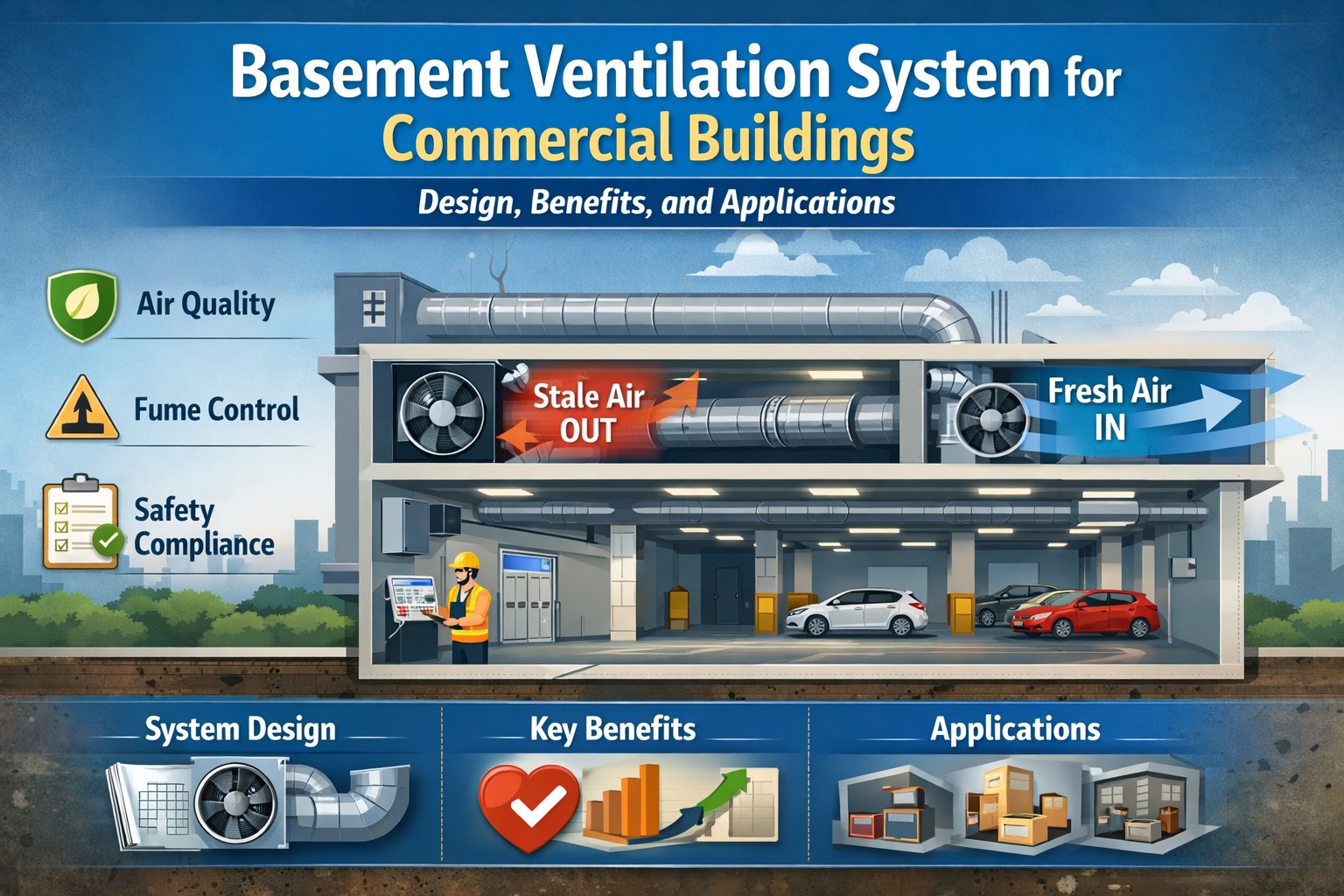
Basement Ventilation System for Commercial Buildings: Design, Benefits, and Applications

Basements in commercial buildings are no longer just storage areas. Today, they are used for parking zones, utility rooms, electrical panels, server rooms, retail storage, and even operational workspaces. However, one common issue remains — poor air circulation.Without a proper basement ventilation system, commercial basements can accumulate harmful gases, excessive humidity, heat, and unpleasant odors. This not only affects air quality but also impacts safety, structural durability, and employee comfort.In this blog, we will explore how a basement ventilation system works, its design considerations, benefits, applications, comparisons with other systems, and why choosing the right HVAC partner is critical.Why Basement Ventilation Is Important in Commercial BuildingsUnlike upper floors, basements lack natural airflow. Windows are limited or absent, and enclosed structures restrict cross-ventilation. As a result:Carbon monoxide may accumulate in parking areasHumidity levels increaseMold growth becomes possibleHeat builds up from generators and equipmentOdors remain trappedFor commercial buildings, this can lead to health hazards, equipment damage, and non-compliance with safety regulations.A properly designed basement ventilation system ensures controlled air exchange, removal of pollutants, and consistent airflow.What Is a Basement Ventilation System?A basement ventilation system is a mechanical setup that circulates fresh air into the basement and removes stale or contaminated air.It typically includes:Supply air fansExhaust fansDucting systemsAir filtersCO sensors (for parking areas)Control panelsThese components work together to maintain air quality, temperature balance, and safety compliance.How a Basement Ventilation System Works (Step-by-Step)Understanding the process helps building owners make informed decisions.Step 1: Air IntakeFresh outdoor air is drawn into the system through intake ducts.Step 2: FiltrationAir passes through filters to remove dust and contaminants.Step 3: Air DistributionThe filtered air is distributed evenly across the basement through ductwork.Step 4: Polluted Air CollectionExhaust ducts collect contaminated or stale air.Step 5: Air ExhaustStale air is discharged outside the building.Step 6: Sensor MonitoringIn parking basements, CO sensors automatically activate ventilation when gas levels rise.This controlled cycle ensures continuous fresh airflow and pollutant removal.Key Design Considerations for Basement Ventilation SystemsDesigning a basement ventilation system requires technical precision. It is not a one-size-fits-all solution.1. Basement Area & VolumeAir changes per hour (ACH) depend on the size and use of the space.2. Usage TypeCar parking requires CO control.Storage areas need humidity management.Electrical rooms need heat removal.3. Air Changes Per Hour (ACH)Most commercial parking basements require 6–10 ACH depending on regulations.4. Duct LayoutProper duct routing ensures uniform airflow.5. Fire Safety ComplianceIntegration with fire alarm and smoke extraction systems is essential.6. Energy EfficiencyEnergy-efficient motors and smart controls reduce operational costs.A professionally engineered basement ventilation system ensures optimal performance without energy waste.Types of Basement Ventilation SystemsDifferent commercial buildings require different solutions.1. Mechanical Exhaust VentilationUses exhaust fans to remove stale air and allows fresh air through natural openings.2. Supply and Exhaust SystemBalanced airflow using both supply and exhaust fans.3. Jet Fan Ventilation SystemCommon in parking basements; eliminates extensive ductwork and improves airflow distribution.4. Smoke Extraction SystemIntegrated system for emergency fire situations.Each type has specific applications depending on building size and regulations.Basement Ventilation vs Natural VentilationFeatureMechanical VentilationNatural VentilationAirflow ControlPreciseLimitedCO MonitoringYesNoSuitable for Large BasementsYesNoComplianceMeets codesOften insufficientWeather DependencyNoYesConclusion: For commercial buildings, mechanical basement ventilation systems are far more reliable and compliant.Benefits of a Basement Ventilation SystemInstalling a professional basement ventilation system offers multiple advantages.1. Improved Air QualityRemoves pollutants, fumes, and dust.2. Carbon Monoxide ControlCritical for underground parking areas.3. Moisture ControlPrevents mold growth and structural damage.4. Enhanced SafetySupports fire and smoke extraction.5. Equipment ProtectionPrevents overheating of electrical panels and generators.6. Energy EfficiencyModern systems use smart sensors to operate only when required.7. Regulatory ComplianceEnsures adherence to local building and safety standards.These benefits make ventilation systems essential for commercial infrastructure.Applications of Basement Ventilation SystemsBasement ventilation systems are used in:Commercial office buildingsShopping mallsHospitalsHotelsIT parksWarehousesResidential high-rise parkingIndustrial buildingsEach application requires tailored airflow design and system configuration.Pros and Cons of Basement Ventilation SystemsProsEnsures fresh airflowReduces harmful gas accumulationEnhances occupant safetyControls humiditySupports fire safety systemsConsInitial installation costRequires periodic maintenanceEnergy consumption if not optimizedProper system design minimizes these drawbacks significantly.Step-by-Step Guide to Choosing the Right SystemStep 1: Assess Basement UsageIdentify whether it is parking, storage, or utility space.Step 2: Calculate Air VolumeDetermine cubic area for airflow calculations.Step 3: Define Compliance RequirementsCheck local safety and fire regulations.Step 4: Select Ventilation TypeChoose between jet fans, ducted system, or hybrid solution.Step 5: Focus on Energy EfficiencyOpt for variable speed drives and smart controls.Step 6: Choose an Experienced ManufacturerEngineering expertise ensures long-term reliability.Maintenance Tips for Long-Term PerformanceTo maintain performance:Clean air filters regularlyInspect fan motorsTest CO sensorsCheck duct blockagesVerify control panel functionsRoutine inspection prevents breakdowns and ensures safe operation.Common Mistakes to AvoidIgnoring airflow calculationsUnderestimating ACH requirementsChoosing low-quality fansSkipping sensor integrationNot planning for future expansionA professional HVAC provider eliminates these errors.FAQs – Basement Ventilation System1. What is the purpose of a basement ventilation system?It ensures proper air circulation, removes pollutants, and maintains safe air quality.2. Is basement ventilation mandatory for parking areas?Yes, most regulations require CO monitoring and mechanical ventilation.3. How many air changes per hour are required?Typically 6–10 ACH depending on usage and regulations.4. Can ventilation systems reduce humidity?Yes, controlled airflow helps manage moisture levels.5. What is a jet fan system?It is a ductless ventilation solution commonly used in parking basements.6. Does basement ventilation improve fire safety?Yes, integrated systems assist in smoke extraction during emergencies.7. How often should maintenance be done?Basic inspection monthly and full servicing annually.Why Engineering Expertise MattersA basement ventilation system is not just about installing fans. It requires:Airflow calculationsPressure analysisCompliance planningNoise controlEnergy optimizationImproper design can lead to uneven airflow, excessive noise, and high power consumption.Professional engineering ensures efficient performance for years.Final ThoughtsA well-designed basement ventilation system is essential for modern commercial buildings. From ensuring fresh air circulation to controlling carbon monoxide levels and maintaining structural integrity, its importance cannot be overstated.Whether it is a parking basement, storage area, or service zone, proper ventilation enhances safety, comfort, and compliance. Investing in a high-quality system designed by experienced professionals ensures long-term reliability and operational efficiency.For commercial projects that demand engineered HVAC excellence, Airtree delivers reliable and customized basement ventilation solutions built for performance, safety, and sustainability.
Read More
Article Feb 16, 2026

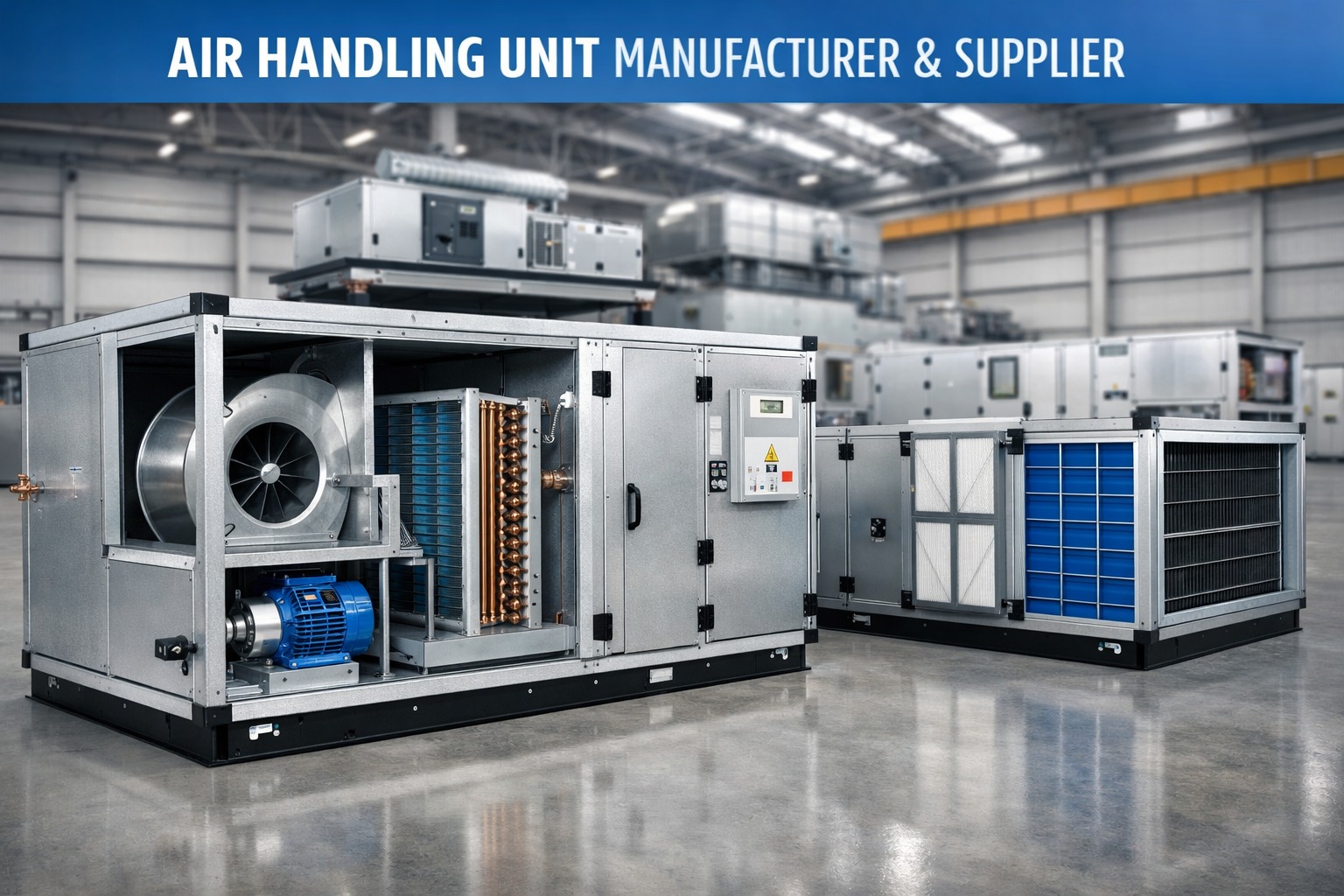
Air Handling Unit Manufacturer and Supplier

In modern HVAC systems, air quality and temperature control are crucial for commercial, industrial, and residential spaces. Air Tree, a leading Air Handling Unit Manufacturer and air handling unit supplier, offers top-of-the-line AHUs designed for reliability, efficiency, and comfort. This guide explores everything you need to know about AHU Air Handling Units, including their types, benefits, FAQs, and why partnering with Air Tree is the smart choice for your project.What is an Air Handling Unit (AHU)?An Air Handling Unit (AHU) is a device used in HVAC systems to regulate and circulate air. It takes in outside air, filters it, heats or cools it, and distributes it to different spaces through ductwork. AHUs are vital in maintaining indoor air quality, controlling humidity, and ensuring comfort.Key Components of an AHU:Filters – Remove dust and particles from the air.Heating/Cooling Coils – Adjust air temperature.Blowers/Fans – Move air through the ducts.Humidifiers/Dehumidifiers – Maintain proper moisture levels.Dampers – Control airflow.Air Tree, as a premium air handling unit supplier, customizes AHUs to meet the unique requirements of any project, ensuring maximum efficiency and durability.Types of Air Handling UnitsDifferent spaces require different AHUs. Here’s a breakdown:Packaged AHUPre-assembled and ready to install.Suitable for medium to large commercial buildings.Modular AHUBuilt in sections; easy to transport and assemble.Ideal for industrial setups.Rooftop AHUInstalled on rooftops for better space utilization.Offers energy efficiency for commercial spaces.Custom AHU by Air TreeDesigned according to specific airflow, temperature, and space requirements.High-performance solutions for unique projects.Why Choose Air Tree for AHUs?Partnering with a trusted Air Handling Unit Manufacturer like us Air Tree ensures the following benefits:High-Quality Standards: Precision-engineered units that meet international quality benchmarks.Energy Efficiency: Designed to minimize energy consumption and operational costs.Durability: Long-lasting AHUs built with superior materials.Custom Solutions: Tailored units for commercial, industrial, and residential projects.Prompt Support: Expert guidance from installation to maintenance.By selecting Air Tree, you are choosing reliability, performance, and a service-driven experience that goes beyond standard supply.Step-by-Step Guide to Choosing the Right AHUSelecting the right AHU Air Handling Unit can be overwhelming. Here’s a simple step-by-step approach:Assess Your RequirementsDetermine the area coverage, airflow, and temperature control needed.Choose the Type of AHUPackaged, modular, rooftop, or custom.Check Efficiency RatingsLook for energy-efficient units that reduce operational costs.Select Filters and CoilsEnsure high-quality filters and cooling/heating coils for optimal performance.Consult with a Trusted SupplierExperts like Air Tree can guide you on the best AHU for your project.Plan Installation and MaintenanceSchedule professional installation and regular maintenance for longevity.Pros and Cons of Air Handling UnitsPros:Improves indoor air quality.Provides precise temperature and humidity control.Can be customized for any space.Energy-efficient and cost-effective in the long term.Cons:Initial investment can be high.Requires periodic maintenance.Large units may need significant space.Comparison Table: Air Handling Units TypesAHU TypeBest ForProsConsPackaged AHUCommercial buildingsReady to install, compactLess flexible for changesModular AHUIndustrial spacesEasy transport, expandableInstallation complexityRooftop AHULarge commercial spacesSaves indoor space, energy-efficientRoof load considerationsCustom AHUUnique project requirementsFully tailored, high efficiencyHigher cost, longer lead timeAir Tree provides all these options, ensuring the perfect fit for any application.Common FAQs About Air Handling UnitsQ1: What is the lifespan of an AHU?A: With proper maintenance, AHUs from Air Tree can last 15–20 years.Q2: How often should AHU filters be changed?A: Filters should be inspected monthly and replaced every 3–6 months depending on usage.Q3: Can AHUs save energy?A: Yes, modern AHUs are designed with high-efficiency fans, motors, and coils to reduce energy consumption.Q4: Do AHUs handle humidity?A: Absolutely. AHUs can integrate humidifiers or dehumidifiers for precise control.Q5: Why choose Air Tree as an air handling unit supplier?A: Air Tree offers customized solutions, superior quality, expert support, and on-time delivery—making them a trusted Air Handling Unit Manufacturer.Air Handling Unit Suppliers: How to SelectWhen choosing an air handling unit supplier, consider:Experience & Reputation – Established suppliers like Air Tree have proven track records.Customization Options – Ability to design units for your specific requirements.After-Sales Service – Reliable maintenance and technical support.Energy Efficiency Solutions – Modern AHUs should lower operational costs.Certifications & Quality – Ensure compliance with international standards.The Role of AHUs in Indoor Air QualityAHUs are central to maintaining healthy indoor air. They:Filter out dust, allergens, and pollutants.Regulate humidity levels.Control temperature efficiently.Provide clean and fresh airflow throughout spaces.A high-quality AHU Air Handling Unit from Air Tree ensures not just comfort but also the health and safety of occupants.Why Air Tree Stands Out in AHU ManufacturingAir Tree combines technology, engineering, and service excellence to deliver top-tier AHUs. Highlights include:State-of-the-art Facility: Advanced machinery and tools ensure precise fabrication.Skilled Engineers: Experienced professionals optimize performance and design.Custom Engineering: Units tailored for any airflow, space, or temperature requirement.On-Time Delivery: Projects completed promptly without compromising quality.Service Partnership: Continuous support for installation, operation, and maintenance.This makes Air Tree not just a supplier but a long-term partner in HVAC projects.Key Considerations Before Buying AHUsProject Size: Match the AHU capacity with your area coverage.Airflow Requirements: Measure required cubic feet per minute (CFM).Energy Efficiency: Look for units with high SEER or IEER ratings.Space & Location: Consider the unit’s footprint and placement.Budget: Factor in both initial cost and long-term maintenance.Working with a trusted Air Handling Unit Manufacturer like Air Tree simplifies these decisions.Maintenance Tips for AHUsProper maintenance ensures longevity and efficiency. Steps include:Regular Filter Replacement – Prevents clogging and maintains airflow.Inspect Coils – Clean coils to optimize heat exchange.Check Fans and Motors – Ensure smooth operation and prevent breakdowns.Lubricate Moving Parts – Reduce wear and tear.Inspect Ductwork – Check for leaks or blockages.Air Tree offers maintenance services to keep your AHUs performing at their best.ConclusionChoosing the right Air Handling Unit Manufacturer and air handling unit supplier is critical for achieving efficient, reliable, and high-quality HVAC systems. Air Tree excels in providing:Customized AHU solutionsEnergy-efficient designsSuperior engineering and durabilityExcellent after-sales supportWhether you need a packaged, modular, rooftop, or fully custom AHU Air Handling Unit, Air Tree is the trusted partner for all your HVAC needs.For more information, visit Air Tree HVAC and explore their full range of AHU solutions tailored for every project.
Read More
Article Feb 13, 2026

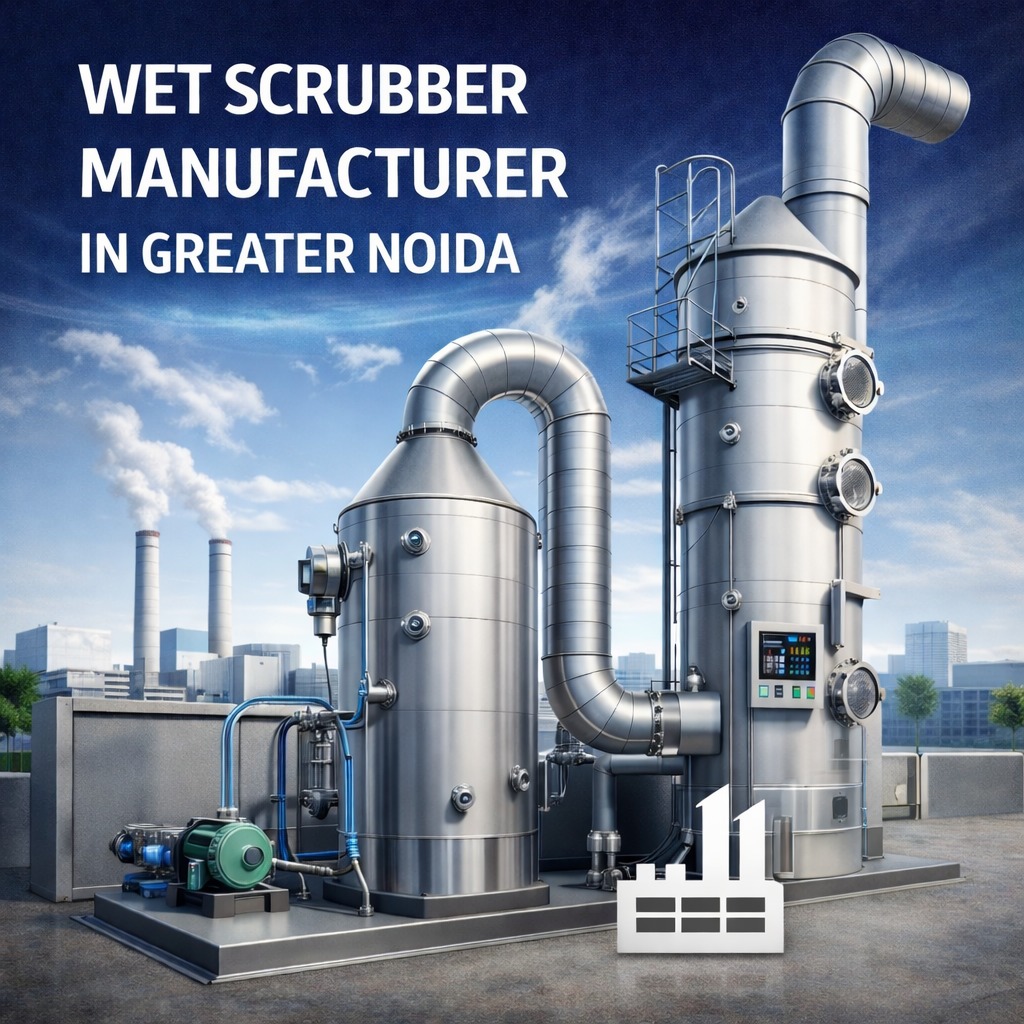
Wet Scrubber Manufacturer in Greater Noida

What Is a Wet Scrubber?A wet scrubber is an air pollution control device designed to remove particulate matter, gases, fumes, and hazardous components from industrial exhaust streams. It works by using a liquid (usually water or a chemical solution) to “wash” pollutants out of a gas stream. When contaminated air passes through the scrubbing liquid, particles and pollutants get captured or dissolved, resulting in cleaner emissions.In simple terms:Wet scrubbers clean dirty air by trapping pollutants in a liquid solution.These systems are widely used wherever harmful gases, corrosive fumes, or dust emissions are generated—such as in chemical processing, ink manufacturing, metal processing, and paint booths.Why Do Industries Use Wet Scrubbers?Industrial plants generate a variety of emissions that can be hazardous to the environment and human health. Some reasons wet scrubbers are preferred include:Ability to handle both particulate and gaseous pollutantsHigh efficiency in removing toxic fumesCan be customized for specific industrial gasesWorks even in high‑temperature applicationsReduces environmental compliance riskWhen pollution control is required by law, wet scrubbers offer a proven, flexible, and efficient solution.How Does a Wet Scrubber Work?Understanding the internal process helps businesses choose the right design and manufacturer.Step‑by‑Step: Wet Scrubber OperationPolluted Air Enters the Scrubber– Exhaust gases from industrial processes are directed into the scrubber unit.Contact with Scrubbing Liquid– Polluted air comes into direct contact with a liquid spray or scrubbing solution.Mass Transfer and Absorption– Particulate matter and soluble gases get absorbed into the liquid.Droplet Separation– The wet scrubber’s internal design separates collected pollutants within the liquid.Clean Air Discharges– Cleaned air exits the scrubber system, meeting emission standards.Effluent Treatment– The wastewater containing pollutants is treated separately before disposal.This controlled wash action ensures efficient removal of both particulate and gaseous contaminants.Types of Wet ScrubbersWet scrubber designs vary based on application and pollutant type. Major configurations include:1. Spray Tower ScrubberA simple design where gas flows upward against sprayed liquid droplets.2. Packed Bed ScrubberContains packing media for improved gas–liquid contact surface.3. Venturi ScrubberUses high velocity and pressure drop to capture fine particles.4. Cyclonic Wet ScrubberUses centrifugal force to remove heavier particles.Every design has its own strengths, depending on the industrial process and pollutant characteristics.Key Components of a Wet Scrubber SystemA wet scrubber is made of several critical components:Inlet ductingScrubbing liquid reservoirLiquid spray nozzlesPacking media (for packed scrubbers)Venturi throat (for Venturi scrubbers)Separators and demistersClean air outletEffluent treatment systemEach component works together to ensure effective pollutant capture and air cleaning.Key Benefits of Choosing a Wet ScrubberIndustries choose wet scrubbers for reasons beyond compliance:✔ High EfficiencyRemoves fine particles and harmful gases with very high capture rates.✔ Versatile Pollution ControlDesigned to handle a range of pollutants—from dust to corrosive fumes.✔ Handles High TemperatureEffective even when gases are hot.✔ CustomizableSystems can be engineered for specific plant requirements.✔ Operational ReliabilityOnce installed properly, wet scrubbers deliver consistent performance.These advantages make wet scrubbers essential for chemical, pharmaceutical, power, and process industries.Wet Scrubber vs Dry Scrubber—What’s the Difference?Pollution control systems can be broadly classified as wet or dry scrubbers FeatureWet ScrubberDry ScrubberLiquid Usage  Yes NoGas & Particle Removal  Excel LimitedWater TreatmentRequired  NoOperating Cost Moderate   LowAcid Gas HandlingVery GoodLimited Conclusion: Wet scrubbers offer broader application and high efficiency, especially for gas and particulate removal. Wet Scrubbers vs Electrostatic Precipitators (ESP)FeatureWet ScrubberESPParticle Size Handling  All sizes  Best for fine particlesGaseous Pollutant Removal    Yes  NoMoisture Handling  Excellent  PoorPower Requirement  Moderate  HighMaintenance Needs  Moderate  High While ESPs are excellent for particulate removal, they cannot remove gases. Wet scrubbers are more versatile.Industries That Use Wet ScrubbersWet scrubbers are widely used in many sectors:Chemical manufacturingDye and pigment plantsPaper and pulp industriesCement and constructionMetallurgical unitsPaint boothsDifferent industries have different emission profiles. A competent wet scrubber manufacturer delivers custom solutions tailored to each industry’s needs.How to Choose a Wet Scrubber Manufacturer in Greater NoidaSelecting the right manufacturer ensures reliable performance, compliance, and long‑term support.Step 1: Evaluate Industry ExperienceChoose a manufacturer with experience in your specific industry. Years of design experience means better performance and fewer errors.Step 2: Technical StrengthLook for companies that provide complete calculation work: airflow, pollutant type, liquid flow, pressure drop analysis, and performance guarantees.Step 3: Customized DesignsOne‑size‑fits‑all solutions do not work for pollution control. Good manufacturers offer tailored designs.Step 4: Material & Build QualityPollution control equipment must be durable. Look for corrosion‑resistant materials and quality fabrication.Step 5: Installation & SupportA manufacturer who provides installation, commissioning, and after‑sales support matters.Step 6: Compliance with StandardsEnsure the manufacturer follows regulatory and industrial standards. Choosing based on these criteria ensures long‑term performance and compliance without constant troubleshooting.Common Mistakes to AvoidEven with the right intention, buyers often make mistakes:Choosing the cheapest optionOverlooking liquid recycle & treatment systemNot checking field performance recordsNot verifying after‑sales supportThese oversights lead to poor performance and higher maintenance costs.Installation and Maintenance GuideProper installation is essential for wet scrubber performance.Installation ChecklistEnsure correct duct alignmentProvide proper foundation supportVerify inlet/outlet orientationInstall spray nozzles at correct anglesConfirm drain & effluent routingMaintenance TipsPeriodically inspect nozzles for cloggingMonitor liquid levels dailyCheck pressure drops across the unitClean packing media regularlyMaintain effluent treatment systemA well‑maintained wet scrubber runs longer with consistent performance.Environmental Impact and SustainabilityIndustrial emissions are a major environmental concern. Wet scrubbers help industries:Reduce air pollutionComply with environmental normsImprove worker safetyLimit greenhouse gas emissionsUsing a quality wet scrubber supports sustainable manufacturing and corporate environmental responsibility.Cost of a Wet Scrubber SystemThe cost depends on several factors:Airflow capacityPollutant typeMaterial gradeComplexity of designInstallation requirementsIt is crucial to balance cost with quality. Choosing the lowest quote may lead to inferior performance.Pros and Cons of Wet Scrubber SystemsProsHighly effective for gas and particulate removalCan handle corrosive and toxic gasesCustomizable designsWorks well at various temperature levelsImproves environmental complianceConsRequires wastewater treatmentHigher initial cost than simple filtersNeeds periodic maintenanceLiquid handling is necessaryUnderstanding both sides helps plan budgets and operational needs accordingly.Real Benefits Experienced by IndustriesExample 1: Chemical PlantA chemical unit installed a wet scrubber and saw a drastic reduction in gas emissions, improved air quality at ground level, and full compliance with CPCB standards.Example 2: Paint Booth FacilityFine paint mist and VOCs were effectively captured and treated, improving worker health and reducing downtime.Example 3: Power PlantSulfur dioxide and particulate matter were significantly reduced during peak operation. These real‑world benefits reflect the practical value of quality wet scrubber systems.FAQs – Wet Scrubber Manufacturer in Greater Noida1. What does a wet scrubber manufacturer do?A wet scrubber manufacturer designs, engineers, and supplies air pollution control systems that use liquid scrubbing to remove pollutants from industrial exhaust streams.2. Are wet scrubbers suitable for all industries?Yes, wet scrubbers are versatile and can handle various gases, fumes, and dust across chemical, pharmaceutical, power, and metal industries.3. How often should wet scrubbers be maintained?Basic checks should be daily, and detailed maintenance should be monthly or based on usage.4. Do wet scrubbers produce wastewater?Yes. The liquid used to capture pollutants must be treated before disposal.5. Are wet scrubbers expensive?Initial costs may be higher than basic filters, but long‑term efficiency and compliance benefits justify the investment.6. Can a wet scrubber remove toxic gases?Yes, specially designed scrubber systems can absorb and neutralize toxic components.7. What materials are used in wet scrubbers?Corrosion‑resistant materials such as FRP, stainless steel, or special alloys are used depending on the application and gas type.Final WordsSelecting a reliable wet scrubber manufacturer is essential for industries committed to effective pollution control, regulatory compliance, and sustainable operations.With customized design capabilities, experienced engineering teams, quality fabrication, and technical service support, companies like Airtree stand out as dependable partners in industrial air pollution management.Whether you are a chemical plant, power facility, or manufacturing unit, choosing the right wet scrubber system ensures healthier environments, safer workplaces, and long‑term compliance with emission standards.  
Read More
Article Feb 13, 2026

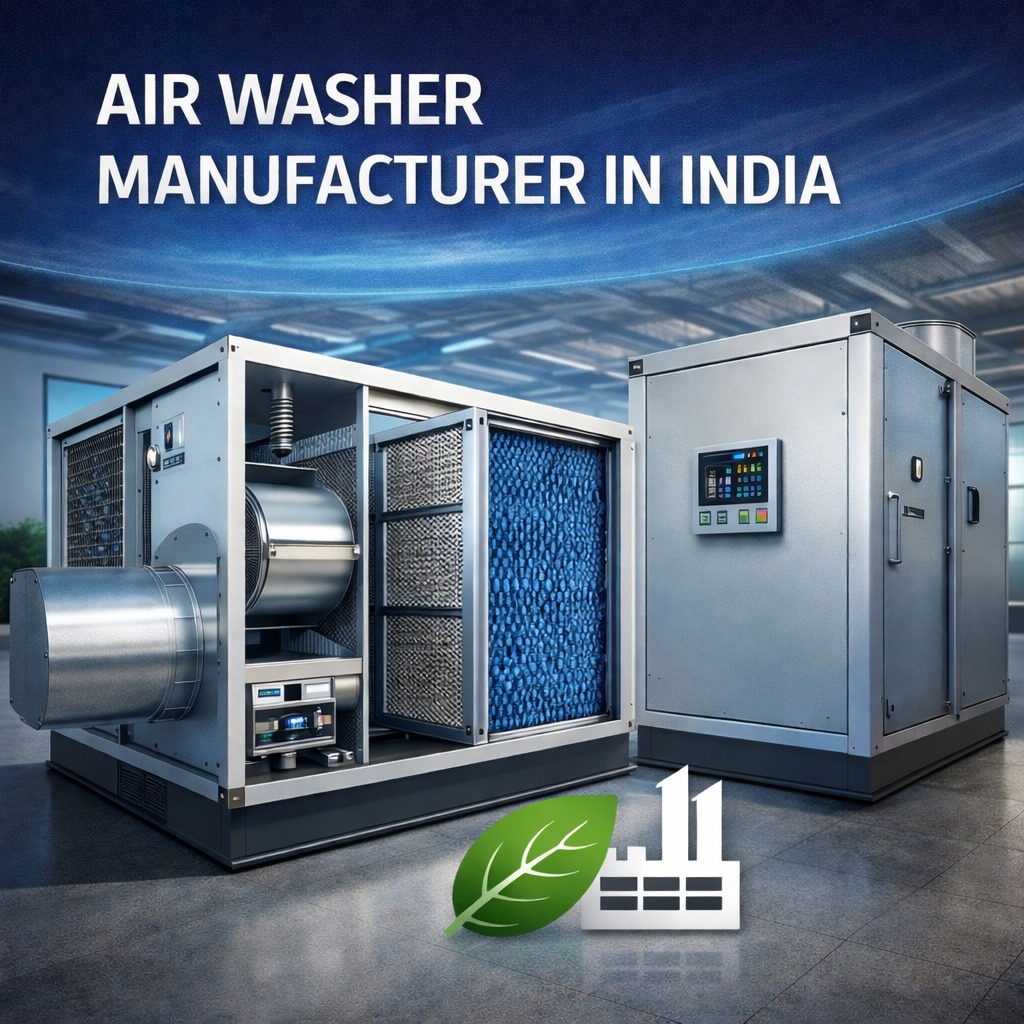
Air Washer Manufacturer in India

Indoor air quality has become a serious priority for industries, commercial buildings, and large facilities across India. From factories and warehouses to auditoriums and institutions, maintaining fresh, clean, and temperature-controlled air is no longer optional—it is essential.This is where an air washer manufacturer plays a critical role. Air washers are widely used in industrial and commercial HVAC systems to cool, humidify, and purify air efficiently. If you are searching for a reliable air washer manufacturer in India, this guide will help you understand everything—from working principles to benefits, comparisons, and how to choose the right system.What Is an Air Washer?An Air washer is a mechanical device used in HVAC systems to clean and condition air. It works by passing air through a chamber filled with water sprays. As air passes through:Dust particles are removedTemperature is reducedHumidity levels are controlledFresh air circulation improvesUnlike basic ventilation systems, air washers both cool and clean the air simultaneously.How Does an Air Washer Work? (Step-by-Step Explanation)Understanding the process helps you choose the right air washer manufacturer.Step 1: Air IntakeFresh or return air enters the air washer unit through intake ducts.Step 2: Pre-FiltrationLarge dust particles are removed using filters.Step 3: Water Spray ChamberAir passes through fine water sprays. This:Removes fine dustReduces air temperature through evaporative coolingControls humidityStep 4: Droplet SeparatorWater droplets are separated from the air before delivery.Step 5: Air SupplyClean, cooled, and conditioned air is supplied into the space.This structured process makes air washers ideal for large-scale industrial and commercial applications.Why Industries Prefer Air Washers in IndiaIndia’s climate conditions—especially high temperatures and dust—make air washers highly practical.Key Reasons:Cost-effective cooling solutionLow power consumption compared to chillersSuitable for large open spacesImproves indoor air qualityEasy maintenanceFor factories, production units, textile plants, and workshops, air washers are a smart investment.Applications of Air WashersA professional air washer manufacturer typically designs systems for:Manufacturing unitsTextile industriesPharmaceutical plantsWarehousesCommercial complexesHospitalsEducational institutionsAuditoriumsEach application requires customized airflow, pressure, and humidity control levels.Air Washer vs Air Cooler vs AHU (Comparison)Many buyers confuse air washers with other HVAC equipment. Let’s clarify.1. Air Washer vs Air CoolerFeatureAir WasherAir CoolerIndustrial Use Yes  LimitedAir Filtration Strong  BasicHumidity Control  Controlled   HighCapacity Large  SmallCustom Design Yes   No Conclusion: Air washers are suitable for industrial and commercial setups, while air coolers are for small residential use.2. Air Washer vs Air Handling Unit (AHU)FeatureAir WasherAHUCooling Method   Water-based   Chilled water/CoilsCost  Lower HigherMaintenance  Moderate TechnicalInstallation  Easier Complex Conclusion: Air washers are economical solutions, whereas AHUs are part of advanced HVAC systems requiring chilled water systems.Key Features to Look for in an Air Washer ManufacturerChoosing the right air washer manufacturer is crucial. Here are the most important factors:✔ Engineering ExpertiseThe manufacturer should provide a customized airflow design.✔ High-Quality ComponentsDurable casingEfficient spray nozzlesCorrosion-resistant materials✔ Energy EfficiencyLow-power motors and optimized fan design reduce operational costs.✔ After-Sales SupportMaintenance service and technical guidance matter.✔ Compliance & StandardsShould follow industrial HVAC standards.Benefits of Choosing the Right Air Washer Manufacturer1. Improved Indoor Air QualityRemoves dust, pollutants, and suspended particles.2. Energy SavingsConsumes less electricity compared to centralized AC systems.3. Better Worker ProductivityA comfortable environment increases efficiency.4. Lower Installation CostMore economical than chilled water HVAC systems.5. Long Equipment LifeQuality manufacturing ensures durability.Pros and Cons of Air WashersPros:Cost-effective solutionSuitable for large spacesEasy maintenanceEnergy efficientCustomizableCons:Not ideal for very high humidity regionsRequires regular water maintenanceMay not replace full HVAC in specialized environmentsUnderstanding both sides helps make informed decisions.How to Choose the Best Air Washer Manufacturer in IndiaFollow this structured approach:Step 1: Define Your RequirementArea sizeAir changes per hourIndustry typeRequired temperature reductionStep 2: Request Technical ProposalA good manufacturer will provide:Airflow calculationsStatic pressure designEquipment specificationsStep 3: Check Past ProjectsExperience in industrial HVAC systems is important.Step 4: Compare Pricing & QualityDo not choose the lowest price blindly—focus on value.Step 5: Review Support SystemInstallation guidance and maintenance services matter long-term.Customization Matters in Industrial ProjectsNot every facility needs the same airflow capacity. A reliable air washer manufacturer will customize:Airflow volumeFan capacitySpray pump capacityFiltration stagesPanel thicknessCoating and corrosion protectionCustomization ensures optimal performance and durability.Energy Efficiency and SustainabilityWith increasing focus on sustainable cooling solutions, air washers are becoming more popular.They:Use water-based evaporative coolingReduce dependency on refrigerantsLower carbon footprintDecrease electricity billsFor industries seeking eco-friendly HVAC solutions, air washers are practical and scalable.Maintenance Guide for Air WashersProper maintenance increases system life.Basic Maintenance Checklist:Clean filters regularlyCheck water pump performanceInspect spray nozzlesRemove sediment from water tankMonitor fan alignmentRegular servicing ensures consistent airflow and cooling performance.FAQs – Air Washer Manufacturer in India1. What does an air washer manufacturer do?An air washer manufacturer designs and produces air washer systems for industrial and commercial HVAC applications.2. Is an air washer better than an air cooler?Yes, for industrial use. Air washers offer better filtration, higher capacity, and structured airflow control.3. How much energy does an air washer consume?It consumes significantly less power than centralized AC systems, making it cost-effective.4. Can air washers control humidity?Yes, they can maintain controlled humidity levels depending on design.5. Where are air washers commonly used?They are used in factories, warehouses, textile units, and large commercial spaces.6. How often should maintenance be done?Basic inspection should be done monthly, and detailed servicing as per usage intensity.7. Are air washers suitable for the Indian climate?Yes. They are especially effective in dry and hot regions.Why India Needs Reliable Air Washer ManufacturersWith expanding industrial zones and commercial infrastructure, the demand for energy-efficient air systems is increasing. Industries need durable, scalable, and technically sound systems rather than temporary cooling solutions.Choosing the right air washer manufacturer ensures:Long-term reliabilityLower operational costEfficient air circulationSafe and comfortable working environmentConclusionSelecting the right air washer manufacturer in India requires technical understanding, quality assurance, and reliable after-sales support. Air washers are a smart solution for industries looking for cost-effective and energy-efficient air conditioning systems.From proper airflow design to customized industrial solutions, working with an experienced manufacturer makes a significant difference in performance and durability.If you are looking for engineered HVAC solutions designed for industrial efficiency and long-term reliability, Airtree stands as a trusted name in advanced air management systems in India.
Read More
Article Feb 13, 2026

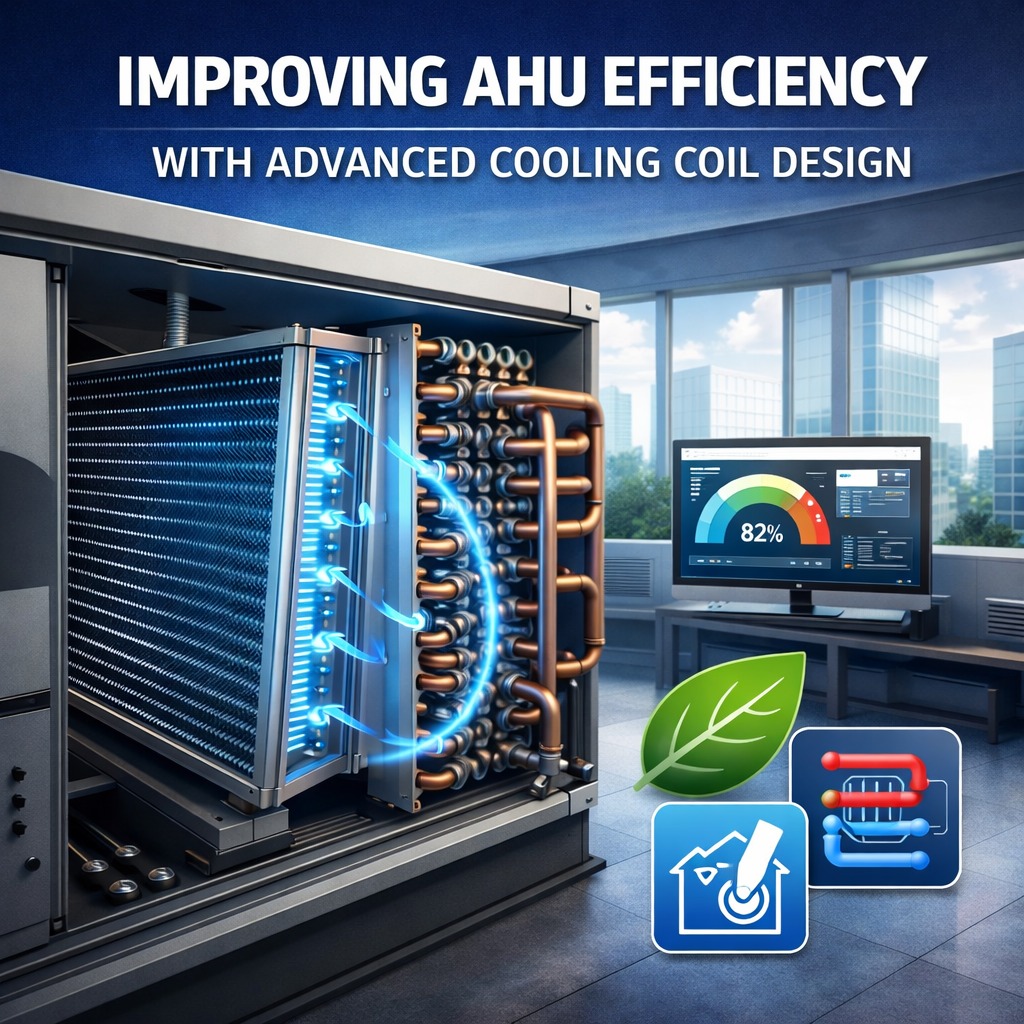
Improving AHU Efficiency with Advanced Cooling Coil Design

An air handling unit cooling coil plays a central role in determining how efficiently an HVAC system performs. While fans, filters, and controls often get attention, the cooling coil is the component that directly handles heat exchange. Its design, material quality, and configuration can significantly influence energy consumption, indoor comfort, and long-term operating costs.As buildings grow larger and efficiency standards become stricter, understanding how advanced cooling coil design improves AHU performance is no longer optional. It is essential.Understanding the Role of an Air Handling Unit Cooling CoilAn air handling unit cooling coil is responsible for removing heat from the air passing through an AHU. Chilled water or refrigerant flows through the coil tubes, absorbing heat from the incoming air before it is supplied to occupied spaces.In an AHU (air handling unit), the cooling coil directly affectsTemperature controlHumidity regulationEnergy efficiencyAirflow resistanceA poorly designed coil can increase pressure drop, overwork fans, and reduce cooling effectiveness. A well-designed coil does the opposite.How AHU Cooling Coil Design Impacts Efficiency?The performance of an AHU cooling coil depends on several design factors that work together.1. Heat Transfer Surface AreaLarger and more effective surface areas allow better heat exchange without increasing airflow resistance. Advanced designs optimize fin spacing and tube arrangement to maximize efficiency within compact dimensions.2. Tube Material and GeometryCopper tubes with enhanced internal grooves improve heat transfer compared to plain tubes. The layout and diameter of tubes also influence how evenly cooling is distributed across the coil face.3. Fin Design and SpacingFin spacing affects both heat transfer and maintenance. Narrow fin spacing improves efficiency but may trap dust in polluted environments. Modern designs balance airflow, heat exchange, and cleanability.4. Airside Pressure DropExcessive pressure drop forces fans to work harder. Efficient coil designs reduce resistance, allowing airflow to move smoothly through the system.Relationship Between Cooling Coils and Overall AHU PerformanceA cooling coil does not work in isolation. It interacts continuously with other components of the AHU (air handling unit), including filters, fans, and ducting.When cooling coils are optimized:Fans consume less powerTemperature control becomes more stableDehumidification improvesSystem lifespan increasesThis is especially important in large installations where even small efficiency improvements lead to significant energy savings.Role of Tube Axial Fan in Supporting Cooling Coil EfficiencyA tube axial fan is often used in ventilation and air distribution systems where high airflow is required at low to medium pressure. When paired correctly with an advanced cooling coil, it ensures uniform air distribution across the coil surface.Benefits of tube axial fans in AHU systems include:Consistent airflow through the cooling coilReduced turbulence and noiseImproved heat exchange efficiencyLower energy consumptionProper alignment between fan performance and coil resistance is critical. An imbalance can reduce cooling efficiency even if individual components are high quality.Advanced Cooling Coil Designs Used TodayModern HVAC systems increasingly rely on advanced cooling coil technologies to meet efficiency and sustainability goals.Multi-Row Cooling CoilsThese coils provide higher cooling capacity without increasing airflow velocity, making them ideal for commercial and industrial applications.Counterflow and Crossflow ConfigurationsOptimized airflow patterns improve heat transfer while maintaining manageable pressure drops.Corrosion-Resistant CoilsSpecial coatings protect coils in coastal, industrial, or chemically aggressive environments, ensuring long-term performance.High-Efficiency Chilled Water CoilsDesigned to work efficiently at higher chilled water temperatures, these coils support energy-saving strategies such as variable flow systems.Why Does Coil Selection Matter More Than Ever?Energy regulations, rising electricity costs, and sustainability goals have made coil efficiency a top priority. Selecting the right air handling unit cooling coil is no longer about meeting minimum capacity requirements. It is about optimizing total system performance.An undersized or poorly designed coil can cause:Inadequate coolingExcess humidityHigher fan energy consumptionFrequent maintenance issuesA properly engineered coil supports stable operation across varying load conditions.Maintenance Considerations for Cooling CoilsEven the best-designed AHU cooling coil needs proper maintenance to perform efficiently over time.Key maintenance practices include:Regular coil cleaning to prevent foulingInspection for corrosion or fin damageMonitoring pressure drop across the coilEnsuring proper drainage to prevent moisture buildupClean coils improve airflow, enhance heat transfer, and reduce strain on fans and chillers.Integration of Cooling Coil Design in Modern HVAC PlanningToday’s HVAC planning focuses on system-level efficiency rather than individual components. Cooling coil selection is coordinated with fan selection, duct design, and control strategies.When integrated properly:Energy consumption dropsComfort levels improveEquipment life increasesOperational costs decreaseThis systems-thinking approach is becoming the standard in modern building design.FAQs1. What is an air handling unit cooling coil?It is a heat exchange component inside an AHU that removes heat from air using chilled water or refrigerant.2. How does an AHU cooling coil affect energy efficiency?Efficient coil design reduces pressure drop and improves heat transfer, lowering fan and chiller energy consumption.3. What role does a tube axial fan play in AHU systems?A tube axial fan supports uniform airflow through the cooling coil, improving heat exchange and overall system efficiency.4. How often should cooling coils be cleaned?Cleaning frequency depends on air quality, but inspections should be done quarterly, with cleaning as required.5. Can cooling coil design impact humidity control?Yes. Proper coil selection improves dehumidification by maintaining correct surface temperatures and airflow balance.Final ThoughtsThe efficiency of an air handling unit cooling coil directly influences the performance, reliability, and operating cost of an HVAC system. Advanced cooling coil design, combined with correct airflow management and regular maintenance, ensures consistent comfort and long-term efficiency. Air Tree designs and supplies engineered cooling coil solutions that align with modern HVAC efficiency demands, supporting reliable performance across commercial and industrial applications. 
Read More
Article Feb 13, 2026

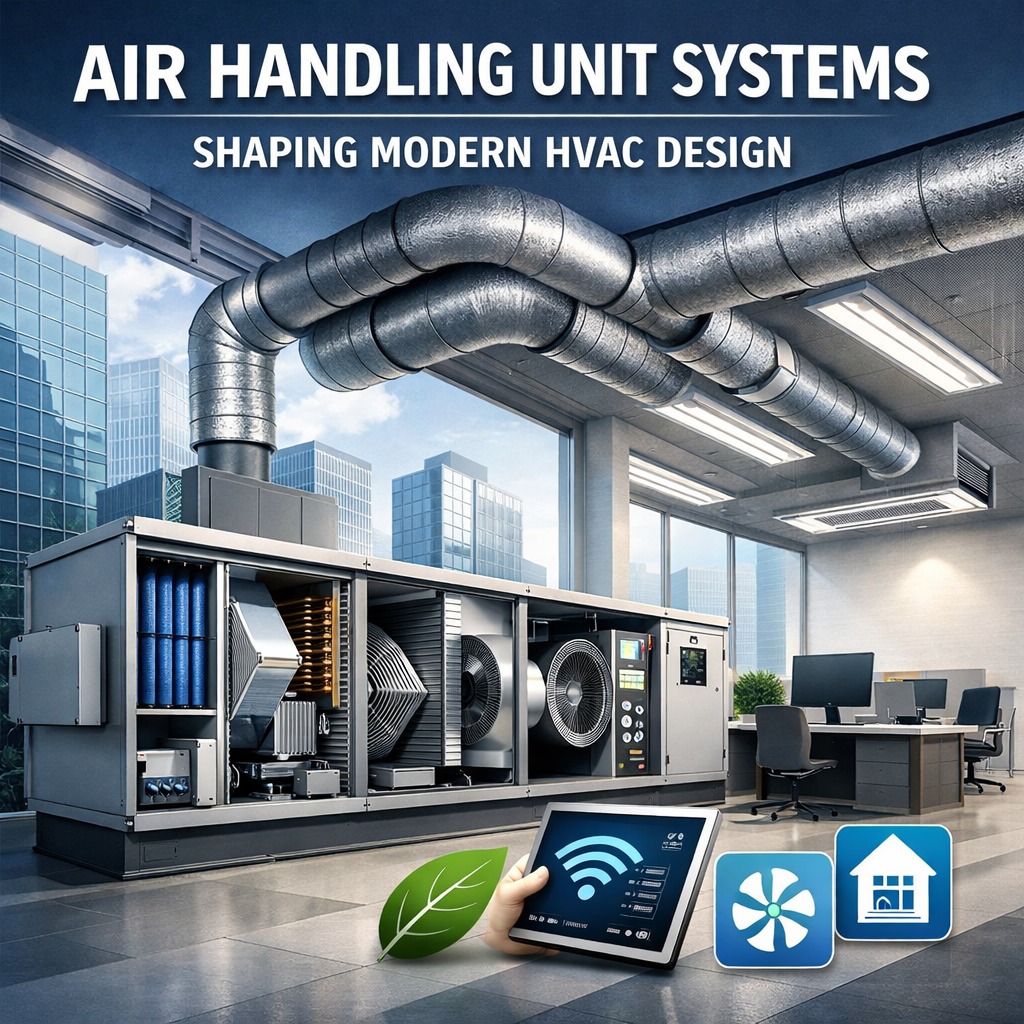
Air handling unit systems shaping modern hvac design

An air handling unit system plays a critical role in maintaining indoor air quality, comfort, and energy efficiency in modern buildings. From commercial offices and hospitals to industrial plants and shopping complexes, these systems are at the heart of heating, ventilation, and air conditioning infrastructure. Understanding how an air handling unit system works, its components, and how to choose the right manufacturer or supplier can help facility managers and decision-makers make informed choices.This guide explains the fundamentals of air handling units, their applications, key components, and what to look for when working with air handling unit manufacturers and air handling unit suppliers.What Is an Air Handling Unit System?An air handling unit system is a centralized device used to regulate and circulate air as part of an HVAC setup. Its main function is to take in fresh air, condition it through filtration, heating, or cooling, and then distribute it throughout a building.The system ensures that indoor environments remain comfortable, hygienic, and compliant with air quality standards. Depending on the application, air handling units can be customized to control temperature, humidity, air purity, and airflow volume.Why Are Air Handling Unit Systems Essential?Indoor air quality directly affects health, productivity, and equipment performance. Poor ventilation can lead to discomfort, airborne contaminants, and energy inefficiency. An effective air handling unit system helps address these challenges by:Providing a continuous supply of fresh, filtered airMaintaining consistent indoor temperaturesControlling humidity levelsReducing airborne pollutants and odorsImproving energy efficiency through optimized airflowIn environments such as hospitals, laboratories, and cleanrooms, the role of air handling units becomes even more critical due to strict air quality requirements.Core Components of an Air Handling Unit SystemUnderstanding the internal components helps in evaluating system quality and performance.1. FiltersFilters remove dust, pollutants, and microorganisms from incoming air. Depending on the application, filters may range from basic pre-filters to high-efficiency particulate air (HEPA) filters.2. Cooling and Heating CoilsThese coils regulate air temperature. Chilled water or refrigerant coils cool the air, while hot water or electric coils provide heating.3. Fans and BlowersFans drive airflow through the system. In many industrial and commercial setups, tube axial flow fans are used for efficient air movement, especially where large volumes of air are required at relatively low pressure.4. DampersDampers control airflow and help regulate the mix of fresh and return air entering the unit.5. Mixing BoxThis section blends outdoor air with return air to maintain indoor air quality while optimizing energy consumption.Role of Tube Axial Flow Fans in Air Handling UnitsTube axial flow fans are commonly integrated into air handling unit systems where high airflow efficiency is required. These fans move air parallel to the axis of rotation, making them suitable for ventilation, exhaust, and supply air applications.Their advantages include:High airflow capacityCompact designEnergy-efficient operationReliable performance in continuous-duty environmentsBecause of these features, tube axial flow fans are often preferred in large commercial buildings, industrial facilities, and HVAC plants.Types of Air Handling Unit SystemsAir handling units can be categorized based on application and design:Packaged AHUs—Pre-assembled units suitable for standard commercial applicationsCustom-Built AHUs—Designed for specific airflow, filtration, and temperature needsModular AHUs—Flexible units that can be expanded or reconfiguredHygienic AHUs—used in healthcare and pharmaceutical environmentsEach type serves different operational requirements, making system selection an important decision.Choosing the Right Air Handling Unit ManufacturerSelecting a reliable air handling unit manufacturer is essential for long-term performance and operational efficiency. A good manufacturer focuses not only on equipment delivery but also on system design, testing, and compliance with industry standards.Key factors to consider include:Experience across multiple industriesCustomization capabilitiesQuality of materials and componentsEnergy-efficient design practicesCompliance with national and international standardsManufacturers who invest in research, testing, and precision engineering typically deliver systems with better durability and efficiency.Importance of Working with Trusted Air Handling Unit SuppliersWhile manufacturers design and produce the units, air handling unit suppliers play a crucial role in availability, installation coordination, and after-sales support. Reliable suppliers ensure timely delivery, proper handling, and access to replacement parts when required.Strong supplier networks help reduce downtime, improve service response times, and support smooth project execution, especially in large-scale installations.Energy Efficiency and SustainabilityModern air handling unit systems are designed with energy efficiency in mind. Features such as variable frequency drives (VFDs), heat recovery systems, and optimized airflow paths help reduce operational costs.Energy-efficient systems not only lower electricity consumption but also support sustainability goals and regulatory compliance, making them a smart long-term investment.Maintenance and Long-Term PerformanceRegular maintenance is critical for ensuring system reliability and air quality. Filters must be cleaned or replaced periodically, coils should be inspected, and fans need proper lubrication and alignment.Well-maintained air handling unit systems:Operate more efficientlyHave longer service lifeReduce unexpected breakdownsMaintain consistent indoor comfortPreventive maintenance programs are strongly recommended for all commercial and industrial installations.FAQs: Air Handling Unit System1. What is an air handling unit system used for?An air handling unit system is used to condition, circulate, and maintain indoor air quality as part of an HVAC system.2. How do tube axial flow fans differ from other fans?Tube axial flow fans move air in a straight line along the axis, offering high airflow efficiency and a compact design for large ventilation needs.3. How do I choose the right air handling unit manufacturer?Look for experience, customization capability, energy-efficient designs, quality standards, and strong technical support.4. Are air handling unit suppliers different from manufacturers?Yes. Manufacturers produce the units, while suppliers handle distribution, logistics, and often support installation and servicing.5. How often should an air handling unit system be serviced?Basic inspections should be done monthly, while comprehensive servicing is recommended at least twice a year, depending on usage.Final ThoughtsAn air handling unit system is a foundational component of modern building infrastructure. Choosing the right design, components, manufacturer, and supplier ensures better air quality, energy efficiency, and long-term reliability.Air Tree specializes in engineered air handling solutions designed to meet diverse commercial and industrial requirements with a focus on performance, efficiency, and durability. For advanced HVAC solutions and system expertise, Air Tree continues to support projects with precision-built air handling unit systems.
Read More
Article Feb 12, 2026

Fresh air treatment unit integrated with tube axial fan

Most people don’t think about fresh air until the day a space starts feeling stuffy, heavy, or uncomfortable. Offices feel tiring by noon. Factories feel warm even when machines aren’t running at full load. Hospitals and schools struggle with indoor air quality despite having air conditioning. That’s where a fresh air treatment unit quietly does the real work.This guide breaks it all down in plain language. No jargon overload. No sales pitch. Just clarity.Fresh Air Treatment Unit: What It Actually DoesA fresh air treatment unit is designed to bring outside air into a building, clean it, cool or heat it if required, control humidity, and then supply it indoors in a controlled way.Unlike regular air-conditioning systems that mostly recirculate indoor air, a fresh air treatment unit focuses on introducing new air. That’s the key difference.Outdoor air comes with dust, pollution, moisture, heat, and sometimes odors. A fresh air treatment unit treats this air before it reaches occupants, making it breathable, balanced, and safe.Why Fresh Air Matters More Than You ThinkIndoor air can be up to five times more polluted than outdoor air. This happens because enclosed spaces trap carbon dioxide, dust, fumes, microbes, and humidity.When fresh air is limited, people feel sleepy, unfocused, and uncomfortable. Over time, poor ventilation can lead to health complaints, equipment damage, and compliance issues.An adequately designed Fresh Air Handling Unit solves this by maintaining oxygen levels, reducing carbon dioxide buildup, and keeping humidity under control.Fresh Air Handling Unit vs Regular AHUThis is where confusion usually starts.A standard AHU mainly circulates indoor air. It cools or heats the same air repeatedly. A fresh air handling unit, on the other hand, is explicitly designed to handle outside air.Here’s the simple difference:AHU: Mostly recirculated airFresh Air Handling Unit: 100 percent or high percentage of outdoor airBecause outdoor air behaves differently, a fresh air handling unit has stronger filtration, better moisture control, and robust fans to handle pressure variations.Treated Fresh Air Unit: Why Treatment Is NecessaryOutdoor air isn’t usable as it is. It must be treated before entering occupied spaces.A treated fresh air unit typically includes:Pre-filters to remove dust and large particlesFine filters for pollutants and smaller particlesCooling or heating coils to control temperatureDehumidification or humidification sectionsHigh-efficiency fans for air movementThis treatment ensures that the air entering the building matches indoor comfort conditions instead of disrupting them.Without proper treatment, fresh air can increase humidity, cause condensation, or overload cooling systems.Role of Tube Axial Fan in Fresh Air SystemsThe tube axial fan plays a critical role in many fresh air treatment unit designs.Unlike centrifugal fans, tube axial fans move large volumes of air at relatively low pressure. This makes them ideal for applications where continuous airflow is required across long ducts or large spaces.Why tube axial fans work well here:Efficient airflow movementCompact designLower power consumption for high air volumesEasy maintenance and accessibilityIn large commercial or industrial setups, tube axial fans help maintain steady air delivery without excessive energy loss.How a Fresh Air Treatment Unit Works Step by StepLet’s walk through the process.First, outdoor air enters the unit through an intake louver. This prevents debris and rainwater from entering.Next, the air passes through filters that remove dust, smoke particles, and pollutants.After filtration, the air moves across cooling or heating coils. This step adjusts the air temperature to match indoor comfort levels.Then comes humidity control. Excess moisture is removed or added depending on climate requirements.Finally, a fan system, often supported by a tube axial fan in larger installations, delivers the treated air into the building through ductwork.The result is clean, comfortable, fresh air flowing continuously.Where Fresh Air Treatment Units Are Commonly UsedFresh air treatment units are not limited to one type of building. They are widely used in:Shopping mallsManufacturing plantsPharmaceutical unitsEducational institutionsEach application has different airflow, filtration, and humidity needs, but the core principle remains the same.Energy Efficiency and Long-Term BenefitsMany people assume that bringing in fresh air increases energy consumption. In reality, modern systems are designed to optimize energy use.A well-designed fresh air handling unit balances airflow, temperature, and humidity without overloading the cooling system.Long-term benefits include:Better indoor air qualityImproved productivity and comfortReduced risk of mold and moisture damageCompliance with ventilation standardsLonger lifespan of HVAC equipmentOver time, these benefits outweigh the initial investment.Design Considerations That MatterNot all fresh air treatment units are the same. Design plays a significant role in performance.Key factors include:Airflow capacity based on occupancyFiltration level depending on pollutionClimate-specific humidity controlFan selection, including tube axial fan usageNoise control measuresEase of maintenanceIgnoring these factors can lead to poor performance even with expensive equipment.Maintenance: The Often Ignored RealityFresh air systems work best when maintained regularly. Filters need cleaning or replacement. Coils require inspection. Fans must be checked for balance and efficiency. Neglecting maintenance reduces airflow, increases energy use, and compromises air quality.A treated fresh air unit is not a one-time installation. It’s a system that needs care to deliver consistent results.Choosing the Right SystemThe right fresh air treatment unit depends on usage, location, and building design. There is no one-size-fits-all solution. A corporate office in a polluted city requires different filtration than a manufacturing unit in a semi-rural area. This is where experience and system understanding matter more than product size or price.Final ThoughtsA fresh air treatment unit is not just another HVAC component. It’s a critical system that directly affects health, comfort, and performance inside a building.When designed correctly, supported by the right Fresh Air Handling Unit, configured as a Treated Fresh Air Unit, and paired with efficient components like a tube axial fan, it quietly improves indoor environments every single day.For those looking to understand and implement quality fresh air solutions backed by industry expertise, Airtree-Quality stands as a trusted name known for engineering-focused, performance-driven air treatment systems.    
Read More
Article Jan 20, 2026

How to Increase the Lifespan of Your HVAC System

An HVAC system is one of the most important investments in any commercial or industrial facility. It controls comfort, air quality, and productivity. But like any major equipment, it doesn’t last forever. The real question is not just how long an HVAC system can run, but how well it can run over time.Many businesses replace their HVAC systems far earlier than they should. Not because the equipment was bad, but because it wasn’t maintained or operated correctly. The good news is this: with the right approach, you can significantly extend the life of your HVAC system and get the maximum value from it.Here’s how.Understand That Lifespan Depends on CareMost HVAC systems are designed to last 12 to 15 years. Industrial-grade systems and AHUs can last even longer. But that lifespan is only possible when the equipment is properly looked after.Neglect, poor maintenance, and incorrect operation can cut that life in half. On the other hand, regular care and smart usage can add many productive years to the system.What this really means is simple:How long your HVAC lasts depends largely on how you treat it.Regular Maintenance Is Non-NegotiableThe single biggest factor in extending HVAC life is regular preventive maintenance. Too many facilities wait for something to break before calling for service. That approach always costs more in the long run.Scheduled maintenance helps to:Identify small problems early Prevent major breakdowns Keep components clean Ensure smooth operation Reduce stress on equipment Simple tasks like cleaning filters, checking belts, lubricating moving parts, and inspecting electrical connections can dramatically improve system longevity.Think of maintenance as health care for your HVAC system. Skip it, and problems are guaranteed.Keep Filters Clean and ReplacedAir filters are small components with a huge impact. Dirty or clogged filters force the system to work harder to move air. This increases energy consumption and puts unnecessary strain on fans, motors, and compressors.Over time, this extra load shortens equipment life.Regular filter cleaning and replacement ensures:Better airflow Improved indoor air quality Lower energy use Less wear on components Something as simple as a clean filter can add years to an HVAC system’s life.Don’t Ignore Small IssuesUnusual noises, reduced cooling, weak airflow, or strange odors are early warning signs. Many people ignore these signals until the system completely fails.That’s a costly mistake.Minor issues like loose belts, small refrigerant leaks, or unbalanced fans can slowly damage major components if left unattended. Fixing problems early is always cheaper and easier than dealing with a full breakdown.Pay attention to your HVAC system. It often tells you when something is wrong.Maintain Proper AirflowHVAC systems are designed to operate with specific airflow levels. Blocked vents, poorly designed ducting, or dirty coils can disrupt that balance.When airflow is restricted:Motors overheat Energy use increases Cooling efficiency drops Components wear out faster Regular inspection of ducts, coils, and air handling units keeps the system breathing freely. Good airflow equals a longer-lasting system.Protect the AHU with Proper CareFor large commercial and industrial setups, the Air Handling Unit is the heart of the HVAC system. Taking care of the AHU is critical to extending overall system life.Key practices include:Regular coil cleaning Checking fan alignment Inspecting dampers Monitoring vibration levels Keeping drain pans clean A well-maintained AHU reduces the load on chillers and compressors, helping the entire HVAC setup last longer.Use the System the Right WayMany HVAC systems suffer simply because they are operated incorrectly.Common mistakes include:Running the system at full capacity all the time Frequently switching it on and off Setting unrealistic temperature levels Overloading equipment beyond its design Smart usage makes a big difference. Setting reasonable temperatures, using programmable controls, and avoiding unnecessary operation reduces stress on the system.The easier your HVAC works, the longer it survives.Invest in Quality ComponentsNot all spare parts and components are equal. Using low-quality belts, motors, filters, or electrical parts may save money in the short term, but they often cause bigger problems later.Genuine, high-quality components ensure:Better performance Fewer failures Longer equipment life Cutting corners on parts is one of the fastest ways to shorten an HVAC system’s lifespan.Keep the System CleanDust, dirt, and moisture are silent enemies of HVAC equipment. Over time they collect inside ducts, coils, and mechanical parts, reducing efficiency and causing corrosion.Regular cleaning of:Coils Drain lines Blowers Condenser units AHU interiors prevents long-term damage and keeps the system running smoothly.A clean system is always a healthier, longer-lasting system.Monitor System PerformanceModern HVAC systems generate valuable performance data. Tracking parameters like temperature, pressure, energy use, and airflow can help detect problems early.Performance monitoring allows you to:Spot inefficiencies Plan timely maintenance Avoid sudden failures Optimize operation Facilities that actively monitor their HVAC systems consistently get more years out of their equipment.Schedule Professional InspectionsWhile basic upkeep can be handled in-house, professional inspections are essential. Trained HVAC engineers can identify issues that routine checks might miss.Periodic expert evaluations help with:Electrical system health Refrigerant levels Motor conditions Control system accuracy Overall system efficiency An annual or semi-annual professional checkup goes a long way in protecting your investment.Upgrade Instead of OverworkingSometimes systems are forced to handle more load than they were originally designed for. Building expansions, new equipment, or increased occupancy can overload old HVAC setups.Instead of pushing an outdated system beyond its limits, timely upgrades or retrofits can extend its useful life. Adding variable frequency drives, better controls, or more efficient AHUs can reduce stress on older equipment.Plan for the Long TermExtending HVAC lifespan isn’t about one big action. It’s about consistent, sensible care over many years.A good long-term plan includes:Regular maintenance schedules Trained operating staff Quality spare parts Timely upgrades Professional support When HVAC care becomes part of routine facility management, systems naturally last longer.The Bottom LineYour HVAC system is built to serve you for many years, but it needs attention and respect to do that. With proper maintenance, smart operation, and timely repairs, you can avoid early replacements and protect your investment.Longer HVAC life means:Lower capital expenses Reduced downtime Better energy efficiency More reliable performance In the end, increasing the lifespan of your HVAC system isn’t complicated. It simply requires discipline, awareness, and the right maintenance partner.Take care of your HVAC system today, and it will take care of your building for years to come.
Read More
Article Jan 20, 2026

How Green Buildings Are Changing HVAC Requirements

The way buildings are designed has changed dramatically over the last decade. Energy efficiency, sustainability, and environmental responsibility are no longer optional features. They are becoming standard expectations. This shift toward green buildings is reshaping every aspect of construction — and HVAC systems are right at the center of that change.For decades, HVAC design focused mainly on cooling, heating, and basic ventilation. Today the priorities are very different. Modern buildings are expected to consume less power, deliver better air quality, reduce carbon footprints, and operate more intelligently. As a result, the requirements from HVAC systems have evolved completely.Let’s understand how green buildings are transforming HVAC design and what it means for commercial and industrial projects.What Defines a Green BuildingA green building is not just a structure with solar panels on the roof. It is a building designed to minimize environmental impact while maximizing efficiency and occupant comfort. Every element — from lighting to water usage to air-conditioning — is planned to reduce energy consumption.Certification systems like LEED, IGBC, and GRIHA have set clear standards for what qualifies as a green building. HVAC systems play a huge role in achieving these certifications because they are among the largest consumers of energy in any facility.This is where the real transformation begins.Efficiency Is Now the First PriorityIn traditional projects, HVAC systems were often oversized to ensure maximum cooling and comfort. Energy use was a secondary concern. In green buildings, that mindset no longer works.Today the focus is on:Right-sizing equipment Reducing energy waste Optimizing airflow Using efficient components Intelligent system controls Air Handling Units, chillers, and ventilation systems must be designed to deliver the same comfort using far less power. Every watt saved contributes to the building’s sustainability goals.What this really means is simple:Green buildings demand smarter HVAC systems, not bigger ones.Better Indoor Air Quality StandardsEarlier, HVAC systems were judged mainly on temperature control. Now indoor air quality has become equally important.Green buildings aim to provide healthier environments for occupants. This requires HVAC systems to deliver:Higher levels of fresh air Superior filtration Better humidity control Proper ventilation rates Low pollutant levels Modern AHUs are now designed with advanced filters, better airflow control, and improved air treatment capabilities. Maintaining clean and healthy indoor air is no longer an added feature — it is a core requirement.Demand for Energy-Efficient AHUsAir Handling Units are the backbone of any HVAC system. In green buildings, their role becomes even more critical.New-generation AHUs are expected to:Operate with minimum energy loss Provide precise airflow control Use high-efficiency fans and motors Reduce pressure drops Support heat recovery systems Manufacturers now have to focus on insulation quality, aerodynamic design, and component efficiency to meet green building expectations. Poorly designed AHUs simply don’t fit into modern sustainable projects.Integration with Smart Building SystemsGreen buildings rely heavily on automation and intelligent controls. HVAC systems can no longer function as standalone equipment. They must integrate seamlessly with building management systems.This has changed HVAC requirements in a big way.Today HVAC systems are expected to:Adjust cooling based on occupancy Monitor real-time air quality Optimize energy use automatically Provide detailed performance data Communicate with other building systems Variable frequency drives, sensors, and smart controllers are becoming standard components instead of optional upgrades. The goal is to use energy only when and where it is truly needed.Fresh Air and Ventilation Are More Important Than EverOne of the key principles of green buildings is improved ventilation. Instead of simply recirculating indoor air, modern designs emphasize bringing in more treated fresh air.This directly impacts HVAC design.Systems must now handle:Higher fresh air volumes Better filtration of outdoor air Energy-efficient treatment of incoming air Balanced ventilation strategies AHUs and ventilation systems need to be carefully engineered to deliver fresh air without increasing energy consumption. This has led to a growing demand for advanced ventilation solutions.Rise of Heat Recovery SystemsHeat recovery has become one of the most important features in green HVAC design.In conventional systems, conditioned air exhausted from the building takes away a huge amount of energy. Green buildings aim to capture and reuse that energy instead of wasting it.Modern AHUs now include:Heat recovery wheels Energy recovery ventilators Exhaust air heat exchangers These technologies pre-condition fresh air using energy from outgoing air. The result is a significant reduction in cooling and heating loads, leading to major power savings.Emphasis on Sustainable MaterialsGreen buildings look beyond energy use. They also focus on the environmental impact of materials used in construction and equipment.This has influenced HVAC manufacturing as well.Clients and consultants now prefer:Eco-friendly insulation materials Low-emission components Durable, long-lasting equipment Designs that reduce overall resource use HVAC manufacturers must adopt responsible production practices to align with green building philosophies.Lower Lifecycle CostsOne of the biggest changes brought by green buildings is the shift in mindset from short-term cost to long-term value.Earlier, projects focused mainly on the initial price of HVAC equipment. Today the focus is on lifecycle costs, which include:Energy expenses Maintenance costs Equipment lifespan Operational efficiency Green buildings demand HVAC systems that may cost slightly more upfront but deliver significant savings over many years. Reliability and efficiency matter more than ever.Stricter Regulations and StandardsGovernments and industry bodies are continuously tightening energy efficiency norms. Building codes are becoming more demanding, especially for commercial and industrial projects.This directly affects HVAC design.Systems must now comply with:Energy performance standards Indoor air quality guidelines Environmental regulations Green certification requirements Meeting these standards requires advanced engineering and high-quality equipment rather than conventional, outdated solutions.A New Opportunity for HVAC InnovationFor HVAC companies and manufacturers, the rise of green buildings is not a challenge — it is an opportunity.Clients today are looking for partners who can deliver:Energy-efficient system design Customized AHU solutions Intelligent controls Sustainable HVAC equipment Long-term performance Firms that understand these changing requirements are leading the way in modern HVAC projects.The Road AheadGreen buildings are not a passing trend. They represent the future of construction and infrastructure. As more businesses commit to sustainability, HVAC systems will continue to evolve.The demand will only increase for:Smarter AHUs Efficient ventilation systems Advanced filtration Low-energy solutions Integrated building technologies In this new era, HVAC is no longer just about comfort. It is about responsibility — toward the environment, toward energy conservation, and toward healthier indoor spaces.And that is exactly where the future of the HVAC industry lies.
Read More
Article Jan 20, 2026

HVAC Challenges in Commercial Kitchens and How to Solve Them

Commercial kitchens are among the most demanding environments for any HVAC system. Unlike offices or retail spaces, a kitchen is filled with heat, smoke, grease, moisture, and strong odors — all generated continuously throughout the day. Keeping such a space comfortable, safe, and hygienic is a serious engineering challenge.For restaurants, hotels, food courts, and large catering units, a poorly designed HVAC system can quickly turn operations into a nightmare. Staff discomfort, excessive heat, high energy bills, and poor air quality are just a few of the problems that follow.Let’s look at the major HVAC challenges in commercial kitchens and, more importantly, how they can be solved.The Unique Nature of Commercial KitchensA commercial kitchen is not like any other workspace. Multiple cooking appliances operate at high temperatures for long hours. Fryers, ovens, grills, burners, and dishwashers all release massive amounts of heat and steam. On top of that, there are grease particles and food odors constantly filling the air.This creates an environment where normal air-conditioning systems simply cannot cope. Commercial kitchens need specialized ventilation and air handling solutions designed specifically for heavy-duty use.Without the right HVAC approach, even the best-designed kitchen layout can fail to function properly.Challenge 1: Excessive Heat Build-UpThe biggest and most obvious problem in any commercial kitchen is heat. Cooking equipment generates continuous high temperatures that quickly raise indoor heat levels.When heat is not removed effectively:Staff productivity drops Working conditions become unsafe Equipment performance suffers Cooling costs skyrocket Many kitchens make the mistake of relying only on comfort air-conditioning to fight this heat. That approach rarely works.The SolutionThe real answer lies in proper ventilation design. Exhaust hoods, make-up air units, and correctly sized AHUs must work together to remove hot air directly from the source.A well-designed kitchen ventilation system captures heat at the cooking area itself and expels it outside before it spreads through the space. This reduces the burden on air-conditioning and keeps temperatures under control.Challenge 2: Smoke and Odor ControlSmoke and strong food odors are unavoidable in commercial kitchens. If not handled properly, they can spread into dining areas, lobbies, and neighboring spaces.This leads to:Unpleasant customer experience Poor indoor air quality Complaints and compliance issues Damage to interiors over time Many kitchens struggle with lingering smells even after installing basic exhaust systems.The SolutionEffective odor and smoke control requires a combination of:High-efficiency kitchen hoods Proper duct design Adequate exhaust airflow Fresh air supply through make-up air units Advanced filtration systems Air Handling Units designed for kitchen applications play a crucial role here. They ensure continuous circulation of treated fresh air while maintaining negative pressure inside the kitchen so that smoke never escapes into other areas.Challenge 3: Grease AccumulationGrease is one of the toughest enemies of any kitchen HVAC system. Over time, grease particles settle inside ducts, filters, and equipment. This creates serious problems:Reduced airflow Fire hazards Higher maintenance costs Unhygienic conditions A system that is not designed to handle grease will fail very quickly.The SolutionCommercial kitchens need specialized grease filtration and extraction systems. This includes:Baffle filters in hoods Grease traps Easy-to-clean ducting Regular maintenance access Properly engineered AHUs and exhaust systems are built with materials and components that can handle greasy environments without losing efficiency.Challenge 4: Maintaining Indoor Air QualityBeyond heat and odors, commercial kitchens must maintain acceptable indoor air quality for staff. Poor ventilation can lead to:Headaches and fatigue Eye irritation Breathing discomfort Long-term health concerns Fresh air supply is just as important as exhaust.The SolutionBalanced ventilation is the key.For every cubic meter of air exhausted from the kitchen, an equal amount of fresh, conditioned air must be supplied. This is where make-up air units and AHUs become essential.Modern AHUs filter, cool, or heat incoming fresh air before delivering it to the kitchen. This keeps the environment breathable and comfortable without wasting energy.Challenge 5: High Energy ConsumptionRunning a commercial kitchen HVAC system can be extremely expensive. Large exhaust fans, powerful AHUs, and air-conditioning units often operate for long hours at full capacity.Without proper planning, energy bills can spiral out of control.The SolutionEnergy efficiency must be built into the system design from day one.Some effective strategies include:Variable speed drives for fans Demand-controlled ventilation Heat recovery systems Energy-efficient AHUs Proper insulation and duct design Smart controls allow the HVAC system to adjust airflow based on actual cooking load instead of running at maximum all the time.This reduces energy consumption without compromising performance.Challenge 6: Space ConstraintsMany commercial kitchens operate in limited spaces, especially in urban restaurants and food courts. Fitting large HVAC equipment into small service areas becomes a practical problem.Poorly planned layouts lead to:Difficult maintenance Inefficient airflow Compromised system performance The SolutionCustomized HVAC solutions are essential for such projects.Compact, modular AHUs and ventilation systems can be designed to fit available space while still delivering required performance. Proper site assessment and tailored engineering make a huge difference in these situations.Challenge 7: Compliance and SafetyCommercial kitchens must follow strict fire and safety regulations. Grease-laden ducts, improper ventilation, or inadequate exhaust systems can create serious fire risks.Meeting safety codes and local regulations is a constant challenge for facility owners.The SolutionWorking with experienced HVAC designers and manufacturers ensures that systems comply with all relevant standards. Fire-rated ducts, proper exhaust velocities, and certified components must be part of the design.A professionally engineered system protects not just the kitchen, but the entire building.Why Integrated HVAC Design MattersThe biggest mistake many projects make is treating kitchen ventilation and air-conditioning as separate systems. In reality, they must work together as one coordinated solution.Exhaust hoods, fresh air systems, AHUs, ducting, and controls all need to be designed in harmony. When these elements are properly integrated, the kitchen becomes:Cooler Cleaner Safer More comfortable More energy-efficient That’s the real goal of a well-planned commercial kitchen HVAC system.Final ThoughtsCommercial kitchens are tough environments, but the challenges are not impossible to overcome. With the right combination of smart design, quality equipment, and proper execution, every problem has a practical solution.A carefully engineered HVAC system does more than just remove heat and smoke. It improves staff productivity, protects equipment, enhances customer experience, and keeps energy costs under control.For any commercial kitchen project, investing in the right HVAC partner is as important as investing in the kitchen equipment itself. Because when the air is handled right, the entire operation runs better.
Read More
Article Jan 20, 2026

The Role of AHUs in Energy-Efficient Buildings

Energy efficiency is no longer just a design preference. It has become a basic requirement for modern buildings. Rising power costs, stricter regulations, and growing awareness about sustainability are pushing industries and businesses to rethink how they manage indoor environments. At the heart of this transformation lies one critical system — the Air Handling Unit, or AHU.Most people think of an AHU simply as a box that pushes air around a building. In reality, it is far more important than that. The AHU is the control center of any HVAC system. It determines how air is filtered, conditioned, circulated, and maintained. And when it comes to creating energy-efficient buildings, the AHU plays a decisive role.Let’s break it down.What an AHU Actually DoesAn Air Handling Unit is responsible for treating and distributing air within a building. It manages temperature, humidity, and air quality to create a comfortable and healthy indoor environment. Every commercial or industrial building depends on AHUs to maintain proper ventilation and thermal comfort.But beyond comfort, an AHU directly affects how much energy a building consumes. A poorly designed or inefficient AHU can waste enormous amounts of power. On the other hand, a well-engineered unit can significantly reduce operating costs.That’s why AHUs have become a central focus in energy-efficient building design.Energy Use in Buildings Starts with AirIn most commercial and industrial facilities, HVAC systems account for 40 to 60 percent of total energy consumption. A large part of that energy is used simply to move, cool, heat, or filter air. Since the AHU is the main equipment performing these tasks, its efficiency has a direct impact on the building’s overall energy performance.What this really means is simple:If the AHU is optimized, the entire building becomes more efficient. Smart Design Leads to Big SavingsEnergy-efficient buildings don’t happen by accident. They are the result of thoughtful system design, and AHUs are a major part of that design.Modern AHUs are built to minimize energy losses at every stage:Better airflow design reduces resistance High-quality insulation prevents thermal leakage Efficient fans consume less power Advanced filters maintain air quality without choking airflow Accurate controls prevent overcooling or overheating Each of these elements may seem small on its own. Together, they make a massive difference.For example, selecting the right fan type and motor can reduce power consumption by 20 to 30 percent. Properly designed coils improve heat transfer and reduce the load on chillers. Even the casing design of an AHU can affect how hard the system has to work.Efficiency is built into the unit from the very first design stage.Precise Airflow Control MattersOne of the biggest ways AHUs contribute to energy savings is through precise airflow management.Many older HVAC systems operate at full capacity all the time, whether it is needed or not. This leads to unnecessary energy use. Modern AHUs, however, are equipped with variable frequency drives and smart controls that adjust airflow based on real demand.Instead of running at 100 percent all day, the system ramps up or down depending on occupancy, temperature, and air quality requirements.The result is simple:Less wasted energy and lower electricity bills.Improved Indoor Air Quality Without Extra PowerEnergy efficiency should never come at the cost of indoor air quality. A well-designed AHU balances both.High-efficiency filtration systems remove dust, pollutants, and contaminants while still allowing smooth airflow. Heat recovery systems reuse energy from exhaust air to pre-condition fresh air. This reduces the load on cooling and heating equipment.In hospitals, pharmaceutical units, and clean rooms, AHUs are designed to maintain strict air quality standards without consuming excessive power. Proper engineering ensures that hygiene and efficiency go hand in hand.Custom AHUs for Specific Building NeedsNot every building has the same requirements. A shopping mall, a factory, a hotel, and a hospital all have completely different HVAC demands.Energy-efficient buildings rely on AHUs that are designed specifically for their application. Custom-built AHUs allow engineers to select the right components, capacities, and configurations for each project.This approach avoids overdesign and underperformance. The system delivers exactly what the building needs — nothing more, nothing less.Customization is one of the smartest ways to save energy in the long run.The Role of Heat Recovery in AHUsOne of the most powerful features in modern AHUs is heat recovery.In large buildings, huge amounts of conditioned air are continuously exhausted outside. Without heat recovery, all the energy used to cool or heat that air is simply lost.Heat recovery systems capture that energy and reuse it to treat incoming fresh air. This dramatically reduces the workload on chillers, boilers, and compressors.For energy-conscious buildings, AHUs with heat recovery are not a luxury. They are a necessity.Lower Operational Costs Over TimeEnergy-efficient AHUs do more than just reduce power consumption. They also bring down long-term operational expenses.Efficient systems experience:Less wear and tear Lower maintenance needs Fewer breakdowns Longer equipment lifeWhen an AHU runs smoothly and efficiently, the entire HVAC system becomes more reliable. Facility managers spend less time dealing with complaints and more time focusing on core operations.That’s a hidden but valuable benefit of good AHU design.Supporting Green Building GoalsGreen building certifications such as LEED and IGBC place heavy emphasis on HVAC efficiency. Since AHUs are a central component of HVAC systems, they play a big role in helping buildings meet these standards.Energy-efficient AHUs help projects earn points for:Reduced energy consumption Better indoor environmental quality Sustainable design practicesFor developers and businesses aiming to build environmentally responsible facilities, investing in the right AHU technology is one of the smartest decisions they can make.The Bigger PictureEnergy-efficient buildings are not created by a single machine or technology. They are the result of well-coordinated systems working together. And at the center of those systems is the Air Handling Unit.A thoughtfully engineered AHU improves comfort, protects health, reduces energy bills, and supports sustainability goals. It quietly works behind the scenes, making buildings perform better every single day.As industries move toward greener and more responsible operations, the importance of AHUs will only continue to grow. Choosing the right AHU today is an investment in efficiency, reliability, and long-term savings.Because better air shouldn’t come at the cost of higher energy.
Read More
Article Jan 08, 2026

The Future of Indoor Air Quality in 2024

Indoor Air Quality (IAQ) has become a global priority. As we move through 2024, specialized AHUs with advanced HEPA filtration and smart sensors are no longer optional—they are essential. At AirTree, we are integrating IoT-enabled monitoring in our units to ensure optimal performance 24/7.
Read More
Article Jan 08, 2026

Why Kitchen Ventilation is Critical for Safety

Commercial kitchens are high-risk environments. Proper ventilation doesn't just clear the air—it prevents grease buildup that leads to fires. Our specialized kitchen exhaust systems are designed to handle high heat and humidity while maintaining whisper-quiet operation.
Read More
Article Jan 08, 2026

Reducing Operational Costs with Energy-Efficient AHUs

Energy is one of the highest costs in industrial operations. By switching to high-efficiency motors and optimized thermal breaks in Air Handling Units, facilities can reduce energy consumption by up to 30%. AirTree focuses on sustainability without compromising on power.
Read More

Download Our Brochure

Fill in your details to get instant access to our product catalog

+91