
HVAC Challenges in Commercial Kitchens and How to Solve Them
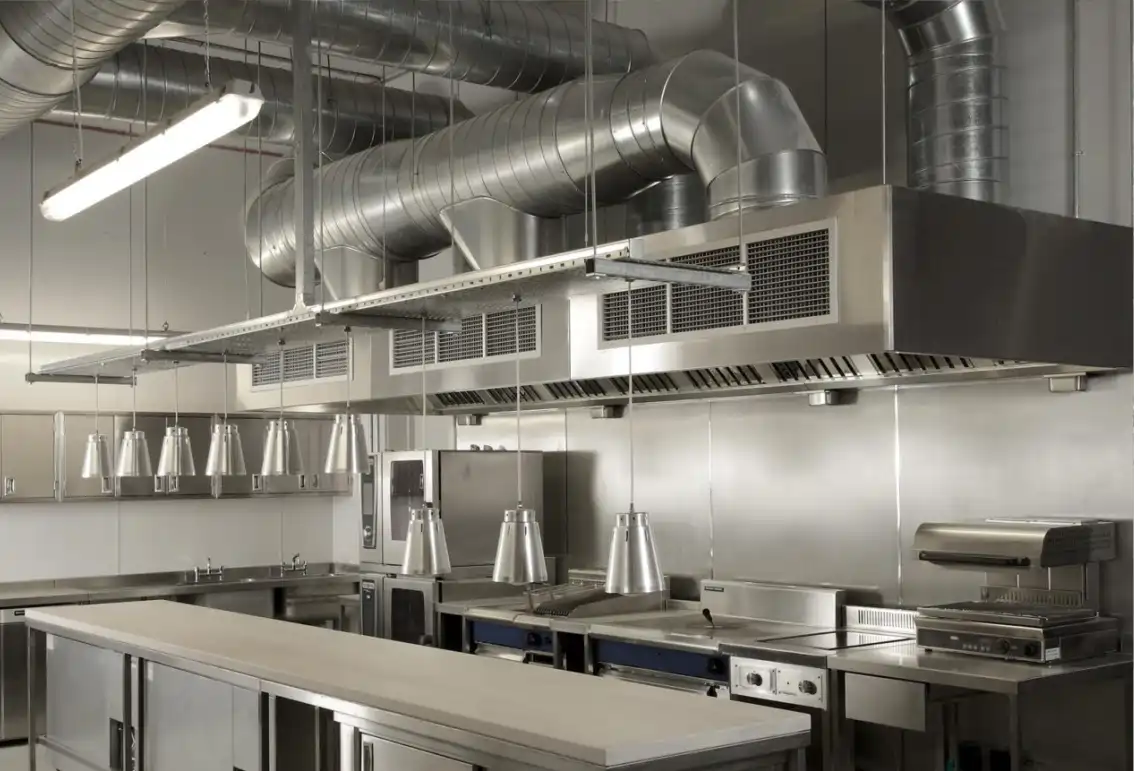
Commercial kitchens are among the most demanding environments for any HVAC system. Unlike offices or retail spaces, a kitchen is filled with heat, smoke, grease, moisture, and strong odors — all generated continuously throughout the day. Keeping such a space comfortable, safe, and hygienic is a serious engineering challenge.
For restaurants, hotels, food courts, and large catering units, a poorly designed HVAC system can quickly turn operations into a nightmare. Staff discomfort, excessive heat, high energy bills, and poor air quality are just a few of the problems that follow.
Let’s look at the major HVAC challenges in commercial kitchens and, more importantly, how they can be solved.
The Unique Nature of Commercial Kitchens
A commercial kitchen is not like any other workspace. Multiple cooking appliances operate at high temperatures for long hours. Fryers, ovens, grills, burners, and dishwashers all release massive amounts of heat and steam. On top of that, there are grease particles and food odors constantly filling the air.
This creates an environment where normal air-conditioning systems simply cannot cope. Commercial kitchens need specialized ventilation and air handling solutions designed specifically for heavy-duty use.
Without the right HVAC approach, even the best-designed kitchen layout can fail to function properly.
Challenge 1: Excessive Heat Build-Up
The biggest and most obvious problem in any commercial kitchen is heat. Cooking equipment generates continuous high temperatures that quickly raise indoor heat levels.
When heat is not removed effectively:
- Staff productivity drops
- Working conditions become unsafe
- Equipment performance suffers
- Cooling costs skyrocket
Many kitchens make the mistake of relying only on comfort air-conditioning to fight this heat. That approach rarely works.
The Solution
The real answer lies in proper ventilation design. Exhaust hoods, make-up air units, and correctly sized AHUs must work together to remove hot air directly from the source.
A well-designed kitchen ventilation system captures heat at the cooking area itself and expels it outside before it spreads through the space. This reduces the burden on air-conditioning and keeps temperatures under control.
Challenge 2: Smoke and Odor Control
Smoke and strong food odors are unavoidable in commercial kitchens. If not handled properly, they can spread into dining areas, lobbies, and neighboring spaces.
This leads to:
- Unpleasant customer experience
- Poor indoor air quality
- Complaints and compliance issues
- Damage to interiors over time
Many kitchens struggle with lingering smells even after installing basic exhaust systems.
The Solution
Effective odor and smoke control requires a combination of:
- High-efficiency kitchen hoods
- Proper duct design
- Adequate exhaust airflow
- Fresh air supply through make-up air units
- Advanced filtration systems
Air Handling Units designed for kitchen applications play a crucial role here. They ensure continuous circulation of treated fresh air while maintaining negative pressure inside the kitchen so that smoke never escapes into other areas.
Challenge 3: Grease Accumulation
Grease is one of the toughest enemies of any kitchen HVAC system. Over time, grease particles settle inside ducts, filters, and equipment. This creates serious problems:
- Reduced airflow
- Fire hazards
- Higher maintenance costs
- Unhygienic conditions
A system that is not designed to handle grease will fail very quickly.
The Solution
Commercial kitchens need specialized grease filtration and extraction systems. This includes:
- Baffle filters in hoods
- Grease traps
- Easy-to-clean ducting
- Regular maintenance access
Properly engineered AHUs and exhaust systems are built with materials and components that can handle greasy environments without losing efficiency.
Challenge 4: Maintaining Indoor Air Quality
Beyond heat and odors, commercial kitchens must maintain acceptable indoor air quality for staff. Poor ventilation can lead to:
- Headaches and fatigue
- Eye irritation
- Breathing discomfort
- Long-term health concerns
Fresh air supply is just as important as exhaust.
The Solution
Balanced ventilation is the key.
For every cubic meter of air exhausted from the kitchen, an equal amount of fresh, conditioned air must be supplied. This is where make-up air units and AHUs become essential.
Modern AHUs filter, cool, or heat incoming fresh air before delivering it to the kitchen. This keeps the environment breathable and comfortable without wasting energy.
Challenge 5: High Energy Consumption
Running a commercial kitchen HVAC system can be extremely expensive. Large exhaust fans, powerful AHUs, and air-conditioning units often operate for long hours at full capacity.
Without proper planning, energy bills can spiral out of control.
The Solution
Energy efficiency must be built into the system design from day one.
Some effective strategies include:
- Variable speed drives for fans
- Demand-controlled ventilation
- Heat recovery systems
- Energy-efficient AHUs
- Proper insulation and duct design
Smart controls allow the HVAC system to adjust airflow based on actual cooking load instead of running at maximum all the time.
This reduces energy consumption without compromising performance.
Challenge 6: Space Constraints
Many commercial kitchens operate in limited spaces, especially in urban restaurants and food courts. Fitting large HVAC equipment into small service areas becomes a practical problem.
Poorly planned layouts lead to:
- Difficult maintenance
- Inefficient airflow
- Compromised system performance
The Solution
Customized HVAC solutions are essential for such projects.
Compact, modular AHUs and ventilation systems can be designed to fit available space while still delivering required performance. Proper site assessment and tailored engineering make a huge difference in these situations.
Challenge 7: Compliance and Safety
Commercial kitchens must follow strict fire and safety regulations. Grease-laden ducts, improper ventilation, or inadequate exhaust systems can create serious fire risks.
Meeting safety codes and local regulations is a constant challenge for facility owners.
The Solution
Working with experienced HVAC designers and manufacturers ensures that systems comply with all relevant standards. Fire-rated ducts, proper exhaust velocities, and certified components must be part of the design.
A professionally engineered system protects not just the kitchen, but the entire building.
Why Integrated HVAC Design Matters
The biggest mistake many projects make is treating kitchen ventilation and air-conditioning as separate systems. In reality, they must work together as one coordinated solution.
Exhaust hoods, fresh air systems, AHUs, ducting, and controls all need to be designed in harmony. When these elements are properly integrated, the kitchen becomes:
- Cooler
- Cleaner
- Safer
- More comfortable
- More energy-efficient
That’s the real goal of a well-planned commercial kitchen HVAC system.
Final Thoughts
Commercial kitchens are tough environments, but the challenges are not impossible to overcome. With the right combination of smart design, quality equipment, and proper execution, every problem has a practical solution.
A carefully engineered HVAC system does more than just remove heat and smoke. It improves staff productivity, protects equipment, enhances customer experience, and keeps energy costs under control.
For any commercial kitchen project, investing in the right HVAC partner is as important as investing in the kitchen equipment itself. Because when the air is handled right, the entire operation runs better.
Stay ahead with more industry insights
Join our newsletter to receive the latest HVAC technologies and ventilation solutions directly in your inbox.