











Ceiling Suspended vs Floor Mounted AHU: How to Choose the Right One
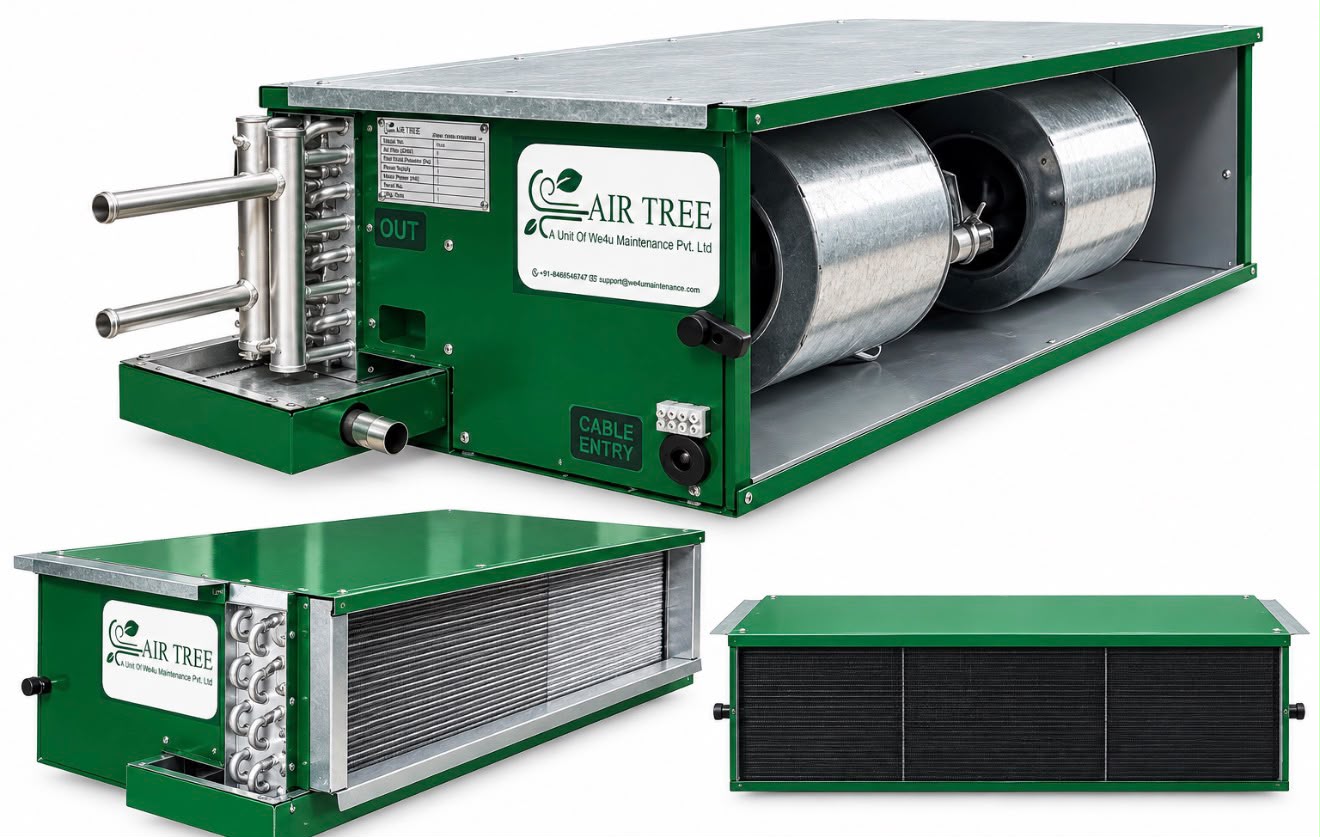
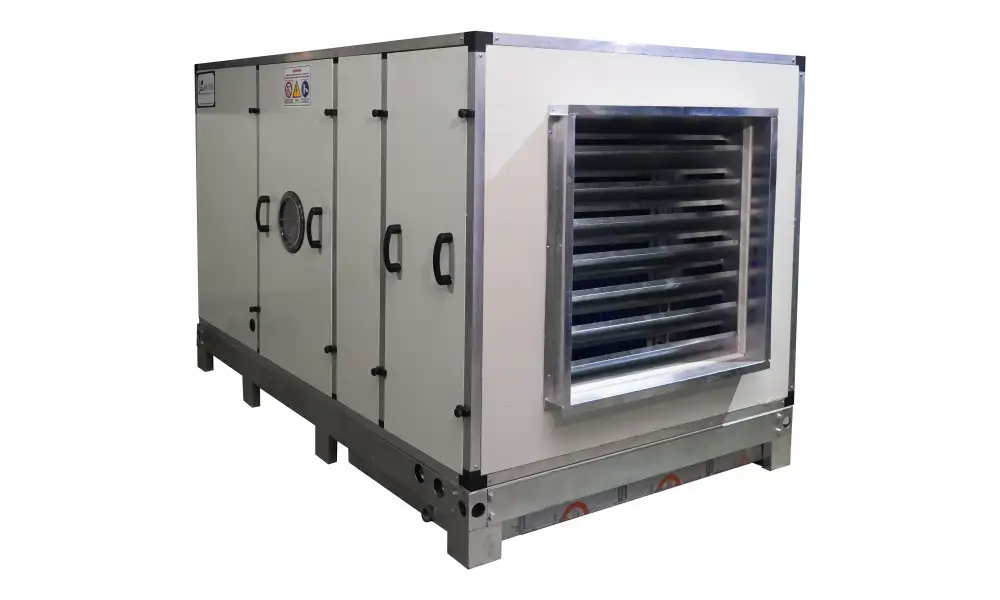
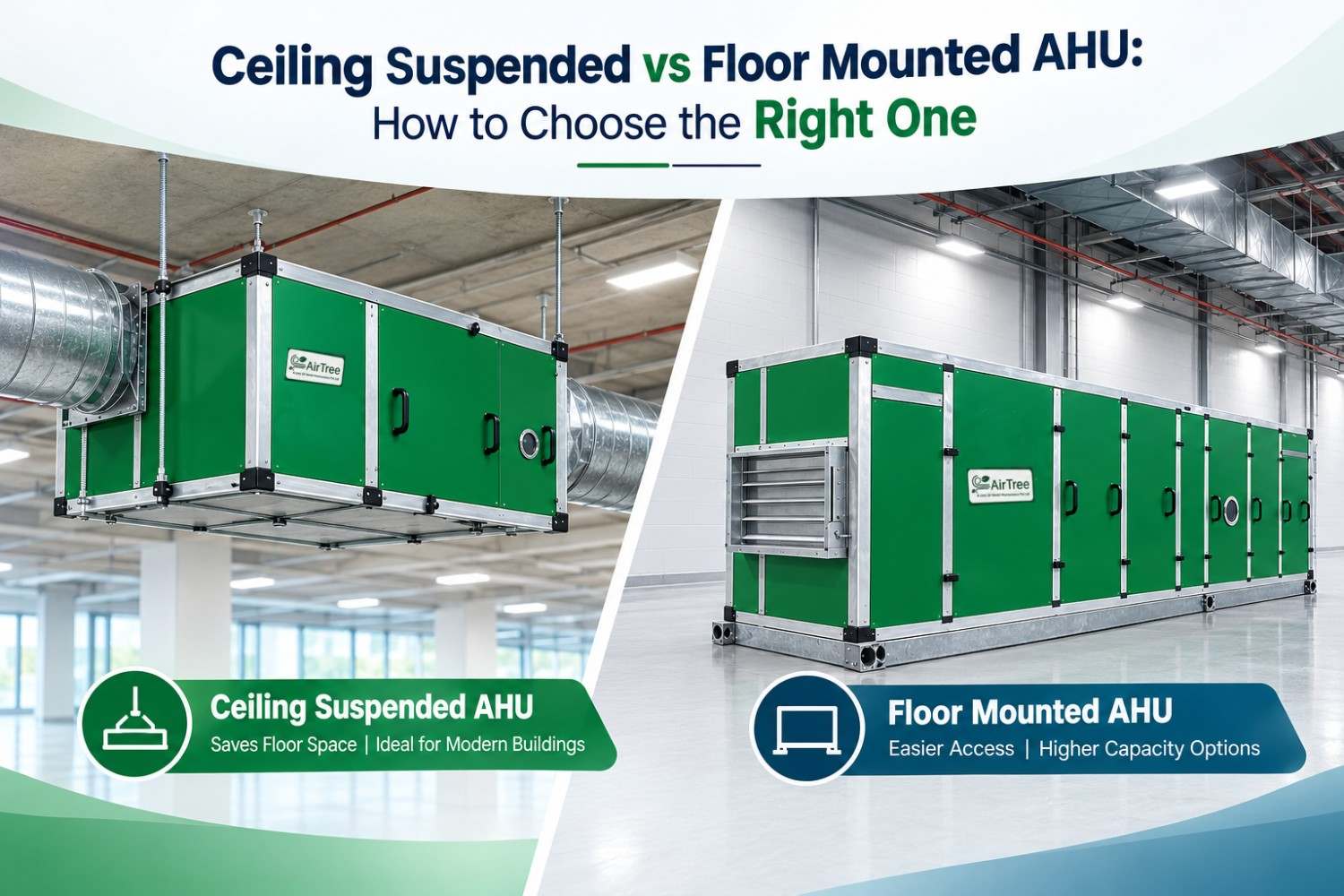
A ceiling suspended AHU hangs from the slab above the false ceiling, so it suits buildings with little plant room space. A floor mounted AHU stands on a plinth in a plant room and suits large airflows and heavy-duty use. Choose by space, airflow, filtration and servicing access.Most AHU quotations begin with a capacity figure, but the first real decision is simpler: where will the unit sit? Put it in the wrong place and you pay for it every year, in noise complaints, awkward filter changes and ducting that runs further than it should.This guide compares the two layouts we are asked about most, the ceiling suspended AHU and the floor mounted AHU, and gives you a short set of questions to settle the choice for your own building.What Each Type IsAn air handling unit does the same job in both layouts. A fan moves air through filters and a cooling coil, sometimes a heating coil or humidity section, and sends it into ducts. What changes is the housing and how it is supported.A ceiling suspended AHU is a compact unit hung from the slab on rods or brackets, usually inside the false ceiling void. A floor mounted AHU is a larger modular unit that sits on a base frame or plinth, normally in a dedicated plant room, and can be built from several sections joined in a row.When a Ceiling Suspended AHU Makes SenseThe main reason to choose a suspended unit is space. If the building has no spare plant room, or the plant room was given to something else during design, hanging the AHU above the ceiling frees that floor area for rent or use.It fits well in offices, hotels, malls, hospitals and other commercial buildings where each floor or zone has its own unit. Airtree's Ceiling Suspended AHU covers 700 to 12,000 CFM, can be supplied with or without treated fresh air, and can include double-skin panels and access doors for maintenance.The trade-offs are real, though. Capacity tops out lower than a floor mounted unit, the structure above must carry the weight, and servicing happens overhead. Filter and coil access needs a proper service panel in the ceiling and enough clearance to work.When a Floor Mounted AHU Makes SenseA floor mounted unit is the workhorse for large airflows and demanding air quality. Because it stands on the ground, it can be longer, taller and heavier, with room for extra sections such as multi-stage filters, a heat recovery section, a humidity section and large coils.That is why it shows up in pharma plants, hospitals, laboratories, airports and clean rooms. Airtree's Floor Mounted AHU is built for high air volumes and critical applications, and can be configured for return air, fresh air or treated fresh air.The cost is floor area. You need a plant room, a plinth, clear space around the unit for coil pull-out and filter access, and a duct route into the building. In return, servicing is easier, because technicians work at floor level with the unit's full length in front of them.Ceiling Suspended vs Floor Mounted AHU: Side by SideFactorCeiling suspendedFloor mountedInstallationHung from the slab, above the false ceilingOn a plinth in a plant roomFloor areaNone usedNeeds a plant roomAir volumeSmall to mid-size (Airtree: 700 to 12,000 CFM)Mid-size to very largeSections and filtrationPossible, but limited by unit sizeMore sections, more room for fine filter stagesServicingOverhead, through access panelsAt floor level, full accessNoiseClose to occupied rooms, needs careKept away in the plant roomTypical useOffices, hotels, malls, floor-wise zonesHospitals, pharma, labs, airports, clean roomsSix Questions That Settle the ChoiceHow much air do you need? Work out the airflow for the zone first. Small and mid-size zones suit a suspended unit. Very large halls or whole-wing duties lean toward floor mounted.Do you have a plant room? If you do not, and cannot create one, the decision is already made.How strict is the air quality brief? Clean rooms, operation theatres and pharma areas need several filter stages and tight humidity control, which is easier to build into a longer floor mounted unit.Can the ceiling carry it? A suspended unit puts its full weight on the slab. Ask your structural engineer to confirm the hangers and load before you order.How loud can it be? A unit above a meeting room or hotel corridor sits close to people. Check the noise data and use vibration isolators. A plant room keeps that sound away from occupants.Who will service it, and how? Count the units. Twenty suspended AHUs mean twenty overhead service points, while two floor mounted units mean two. Plan the access panels now.Many buildings use both: floor mounted units in the plant room for large halls and critical zones, suspended units on upper floors where space is tight. A treated fresh air unit can then handle ventilation for either, which matters when you design to ASHRAE 62.1 rates.Common Mistakes to AvoidSizing by tonnage per square foot alone, instead of a proper load calculation.Choosing a suspended unit and forgetting the service clearance around it.Ignoring noise when the unit sits above an occupied room.Placing filters and coils where nobody can reach them, so they never get cleaned. Our guide on cleaning an AHU cooling coil shows what regular access saves you.Treating fresh air as an afterthought. For wider system choices, see our guide to choosing the right HVAC system.Where Airtree Fits InAirtree makes both layouts in Greater Noida, along with Vertical AHUs, Cooling coils and treated fresh air units, so one team can specify the whole air path. If you are unsure which suits your project, share your layout, airflow and air quality needs and the engineers will recommend a configuration.Browse the air handling unit range, see the full products catalogue, or get a quote. If you are weighing AHUs against room-level units, our comparison of AHU vs FCU explains the difference.Frequently Asked QuestionsWhat is the main difference between a ceiling suspended and a floor mounted AHU? A ceiling suspended AHU hangs above the false ceiling and saves floor space. A floor mounted AHU stands in a plant room and handles larger airflows and more sections.Which AHU is better for hospitals? Both are used. Critical zones with strict filtration and humidity control usually get floor mounted units, while lighter-duty areas can use ceiling suspended ones.What airflow does a ceiling suspended AHU cover? Airtree's Ceiling Suspended AHU covers 700 to 12,000 CFM, with or without treated fresh air.Does a ceiling suspended AHU need a plant room? No. It goes above the false ceiling, but it needs structural support, service access and a drain route for condensate.Can one building use both types? Yes. Many buildings pair floor mounted units for large or critical zones with suspended units where space is limited.Keep reading: browse the Airtree blog or the Knowledge Hub for more on air handling and ventilation.