
The Role of AHUs in Energy-Efficient Buildings
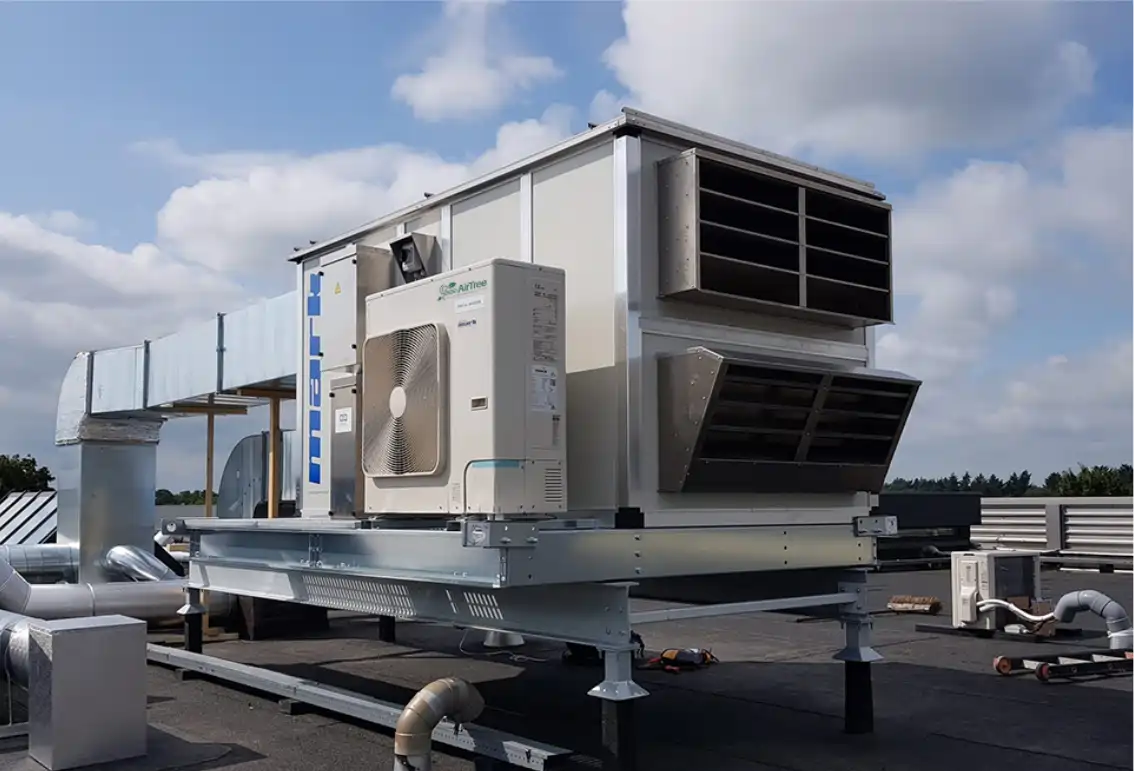
Energy efficiency is no longer just a design preference. It has become a basic requirement for modern buildings. Rising power costs, stricter regulations, and growing awareness about sustainability are pushing industries and businesses to rethink how they manage indoor environments. At the heart of this transformation lies one critical system — the Air Handling Unit, or AHU.
Most people think of an AHU simply as a box that pushes air around a building. In reality, it is far more important than that. The AHU is the control center of any HVAC system. It determines how air is filtered, conditioned, circulated, and maintained. And when it comes to creating energy-efficient buildings, the AHU plays a decisive role.
Let’s break it down.
What an AHU Actually Does
An Air Handling Unit is responsible for treating and distributing air within a building. It manages temperature, humidity, and air quality to create a comfortable and healthy indoor environment. Every commercial or industrial building depends on AHUs to maintain proper ventilation and thermal comfort.
But beyond comfort, an AHU directly affects how much energy a building consumes. A poorly designed or inefficient AHU can waste enormous amounts of power. On the other hand, a well-engineered unit can significantly reduce operating costs.
That’s why AHUs have become a central focus in energy-efficient building design.
Energy Use in Buildings Starts with Air
In most commercial and industrial facilities, HVAC systems account for 40 to 60 percent of total energy consumption. A large part of that energy is used simply to move, cool, heat, or filter air. Since the AHU is the main equipment performing these tasks, its efficiency has a direct impact on the building’s overall energy performance.
What this really means is simple:
If the AHU is optimized, the entire building becomes more efficient.
Smart Design Leads to Big Savings
Energy-efficient buildings don’t happen by accident. They are the result of thoughtful system design, and AHUs are a major part of that design.
Modern AHUs are built to minimize energy losses at every stage:
- Better airflow design reduces resistance
- High-quality insulation prevents thermal leakage
- Efficient fans consume less power
- Advanced filters maintain air quality without choking airflow
- Accurate controls prevent overcooling or overheating
Each of these elements may seem small on its own. Together, they make a massive difference.
For example, selecting the right fan type and motor can reduce power consumption by 20 to 30 percent. Properly designed coils improve heat transfer and reduce the load on chillers. Even the casing design of an AHU can affect how hard the system has to work.
Efficiency is built into the unit from the very first design stage.
Precise Airflow Control Matters
One of the biggest ways AHUs contribute to energy savings is through precise airflow management.
Many older HVAC systems operate at full capacity all the time, whether it is needed or not. This leads to unnecessary energy use. Modern AHUs, however, are equipped with variable frequency drives and smart controls that adjust airflow based on real demand.
Instead of running at 100 percent all day, the system ramps up or down depending on occupancy, temperature, and air quality requirements.
The result is simple:
Less wasted energy and lower electricity bills.
Improved Indoor Air Quality Without Extra Power
Energy efficiency should never come at the cost of indoor air quality. A well-designed AHU balances both.
High-efficiency filtration systems remove dust, pollutants, and contaminants while still allowing smooth airflow. Heat recovery systems reuse energy from exhaust air to pre-condition fresh air. This reduces the load on cooling and heating equipment.
In hospitals, pharmaceutical units, and clean rooms, AHUs are designed to maintain strict air quality standards without consuming excessive power. Proper engineering ensures that hygiene and efficiency go hand in hand.
Custom AHUs for Specific Building Needs
Not every building has the same requirements. A shopping mall, a factory, a hotel, and a hospital all have completely different HVAC demands.
Energy-efficient buildings rely on AHUs that are designed specifically for their application. Custom-built AHUs allow engineers to select the right components, capacities, and configurations for each project.
This approach avoids overdesign and underperformance. The system delivers exactly what the building needs — nothing more, nothing less.
Customization is one of the smartest ways to save energy in the long run.
The Role of Heat Recovery in AHUs
One of the most powerful features in modern AHUs is heat recovery.
In large buildings, huge amounts of conditioned air are continuously exhausted outside. Without heat recovery, all the energy used to cool or heat that air is simply lost.
Heat recovery systems capture that energy and reuse it to treat incoming fresh air. This dramatically reduces the workload on chillers, boilers, and compressors.
For energy-conscious buildings, AHUs with heat recovery are not a luxury. They are a necessity.
Lower Operational Costs Over Time
Energy-efficient AHUs do more than just reduce power consumption. They also bring down long-term operational expenses.
Efficient systems experience:
- Less wear and tear
- Lower maintenance needs
- Fewer breakdowns
- Longer equipment life
When an AHU runs smoothly and efficiently, the entire HVAC system becomes more reliable. Facility managers spend less time dealing with complaints and more time focusing on core operations.
That’s a hidden but valuable benefit of good AHU design.
Supporting Green Building Goals
Green building certifications such as LEED and IGBC place heavy emphasis on HVAC efficiency. Since AHUs are a central component of HVAC systems, they play a big role in helping buildings meet these standards.
Energy-efficient AHUs help projects earn points for:
- Reduced energy consumption
- Better indoor environmental quality
- Sustainable design practices
For developers and businesses aiming to build environmentally responsible facilities, investing in the right AHU technology is one of the smartest decisions they can make.
The Bigger Picture
Energy-efficient buildings are not created by a single machine or technology. They are the result of well-coordinated systems working together. And at the center of those systems is the Air Handling Unit.
A thoughtfully engineered AHU improves comfort, protects health, reduces energy bills, and supports sustainability goals. It quietly works behind the scenes, making buildings perform better every single day.
As industries move toward greener and more responsible operations, the importance of AHUs will only continue to grow. Choosing the right AHU today is an investment in efficiency, reliability, and long-term savings.
Because better air shouldn’t come at the cost of higher energy.
Stay ahead with more industry insights
Join our newsletter to receive the latest HVAC technologies and ventilation solutions directly in your inbox.